












How Stairway Foundation swapped Vimeo for Kinescope and put the savings into frontline child protection



About Stairway Foundation
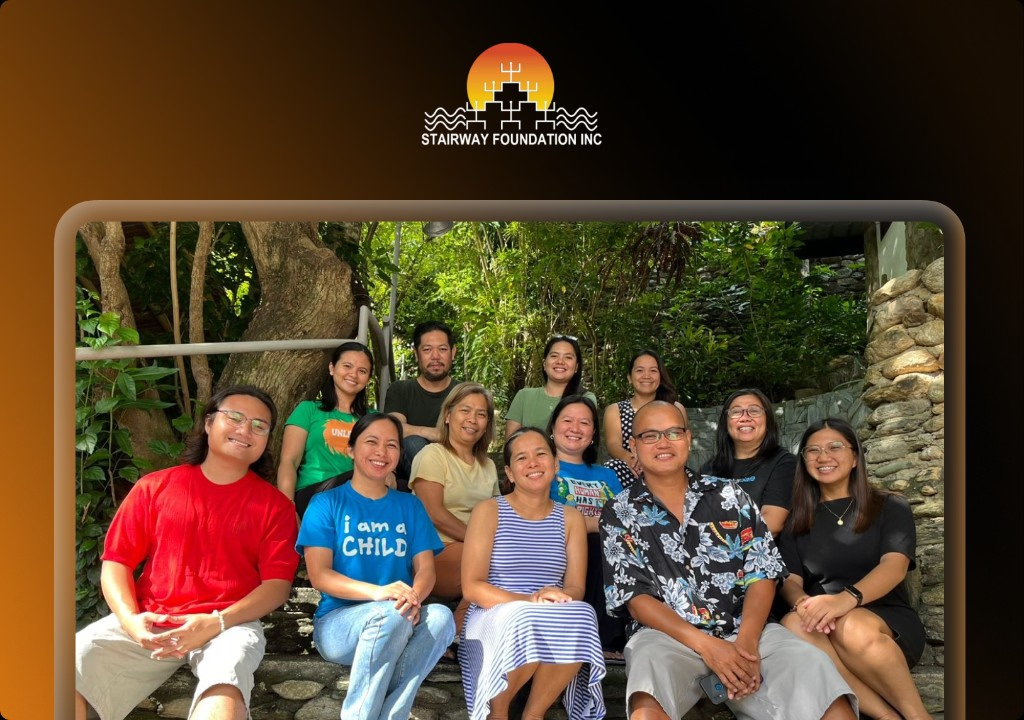
Stairway Foundation has spent more than three decades protecting children in the Philippines from sexual abuse and exploitation. It works in two directions at once: teaching children to recognize and report abuse, and training the adults responsible for them — the police, social workers, and teachers who decide what happens when a child speaks up. The foundation began in the early 1990s as a shelter for children coming off the street, on an island south of Manila, and it runs that shelter to this day.
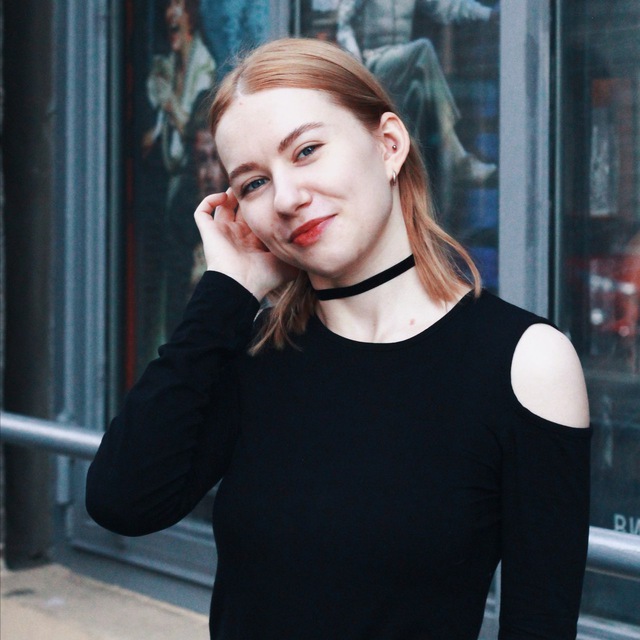
Through its work with National Government Agencies, particularly the Department of Education, as well as through a network of partner NGOs, Stairway’s materials have reached over 9 million children, and its training shapes how the adults around them respond. Much of that work runs through Stairway’s child-protection specialist, Ysrael “Ace” Diloy. He also assists in running its e-learning platform, so he knows better than anyone what Stairway’s video has to do. He walked us through how it all works.
How animation helps break the silence
Video has been central to Stairway’s work almost from the beginning, and the reason traces back to its early experience running the shelter program. The children arriving there received the usual interventions: food, schooling, sports, art. Most of them improved, but a few did not, no matter what intervention was provided.
Despite all of those interventions, some children would press a self-destruct button and then spiral down.
The hidden issue, the team eventually learned, was sexual abuse the children had never disclosed. In the Philippines during the early 1990s, a huge culture of silence surrounded the subject and there were very few opportunities to talk about it in an open and meaningful way, so the organization turned to the arts, through storytelling. Monica Ray, Stairway’s co-founder and creative director, wrote storybooks and ran storytelling sessions to open up the subject in a less threatening way for children.
One by one, the other children, after the storytelling session, would say: ‘That’s me, that’s my story.’
As much as Stairway wanted to share that approach with other organizations, its technology was not easily transferable, as not everyone was a storyteller. Eventually, Stairway figured out that animations could be a viable option.
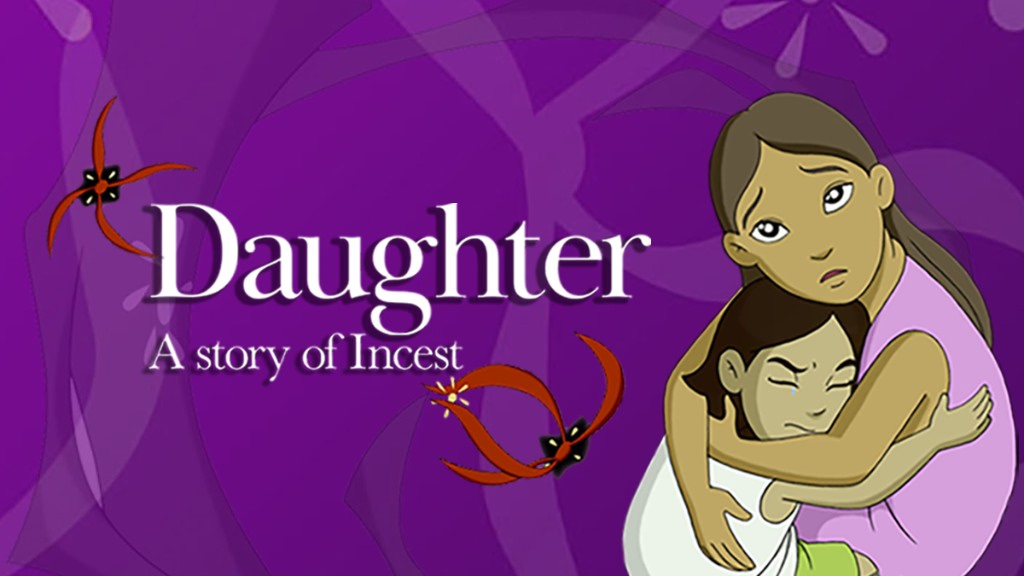
In 2004 Stairway released Daughter, a hand-drawn short film about incest, followed by A Good Boy (2005), on pedophilia, and Red Leaves Falling (2009), on child sex trafficking and child pornography. Each film runs 15 to 18 minutes and is paired with mandatory training. Ace says the films can teach on their own, but guided use gets the most out of them.
As Ace explains, you cannot lead with statistics on a subject this painful. People need a human point of connection first, and animations can initiate discussion about a sensitive issue without necessarily scaring people away. That emotional foothold is what makes the serious conversation possible.
Another reason advocacy matters is the sheer level of violence children in the Philippines face, online and offline. Children who lack basic information on protecting themselves stay vulnerable, and an untrained adult can make things worse, meeting a child’s disclosure with disbelief or blame instead of help.
Our training with adult duty bearers doesn’t only talk about the law. It talks about the sociocultural aspects that affect victimization, the cultural beliefs and practices that contribute to it.
Since then, Stairway has developed additional animated short films that tackle various issues — from cyberbullying to non-consensual sharing of intimate images — all of them being used for training and child protection education sessions. That is the work the video has to carry, whether it reaches a single classroom or a national rollout.
The challenge: delivering video online and off across the Philippines
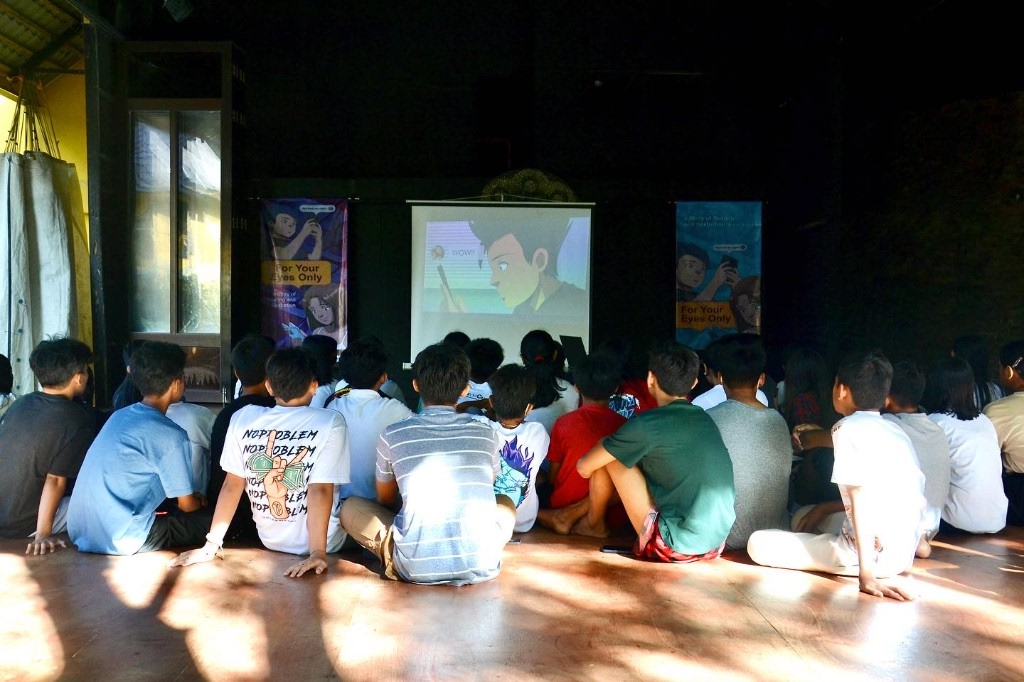
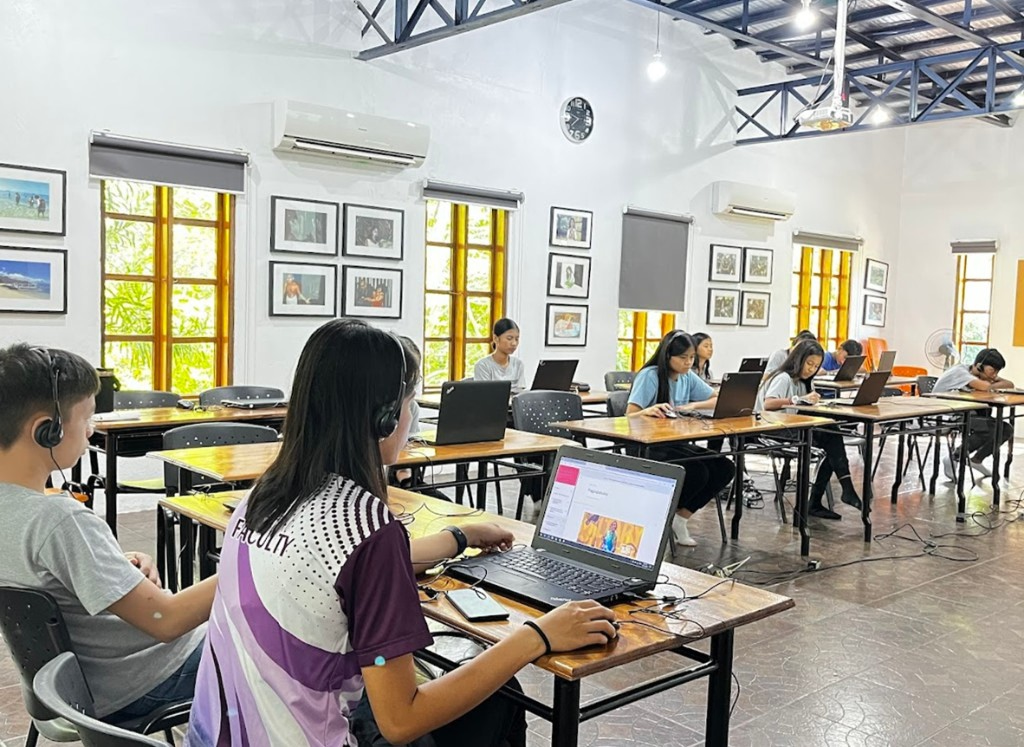
Stairway delivers its films in very different ways depending on the audience. With children, sessions are usually face to face, and the video plays from a trainer’s laptop and a projector in a classroom or a village hall. Adults, by contrast, learn mostly through e-learning, which the foundation had been building before the pandemic and leaned on heavily once in-person training stopped.
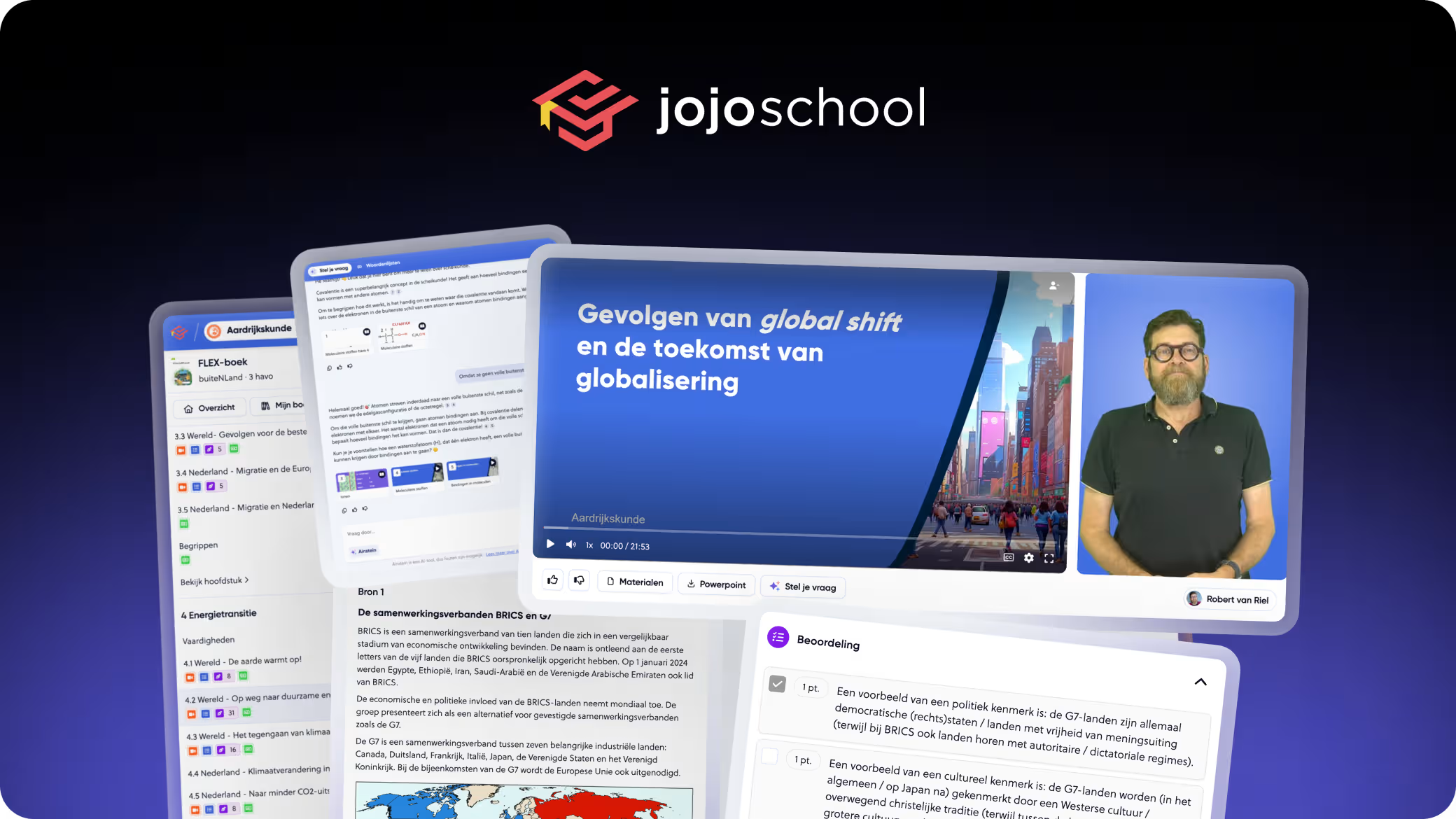
That e-learning platform runs on Moodle, and the videos live inside it through Kinescope embed codes. The modules are built around interaction: a police officer, social worker, or teacher watches a film like Daughter, then answers a knowledge check or writes a reflection before moving on. Because connectivity across the Philippines is uneven, some courses have to be downloadable for offline use, with the video bundled in; the rest stream from Kinescope.
The reach extends well beyond Stairway’s own sessions. Through the Break the Silence National Network, partner NGOs train under Stairway and are then licensed to use its films in their own communities. And through a partnership with the Department of Education, the animations are embedded royalty-free in national learning modules that, in Ace’s words, reach millions of children.
Why move from Vimeo
For several years, from around 2017, Stairway hosted its video on Vimeo. Technically it did the job and had the features the team needed. The problem was the shape of the deal.
The plan was flat, charging the same every month whatever the foundation streamed, and Stairway’s use was modest and uneven, nothing like the steady, high-volume load a flat plan is built for. Stairway was paying a fixed fee for far more than was needed, and by the time the subscription came up for renewal, that no longer made sense.
What Kinescope had to offer
The search began plainly, with Ace looking up alternatives to Vimeo and comparing them on features, fit, and what struck him as fair pricing. Kinescope was one of several. What turned a shortlist into a decision was an email to Kinescope’s Managing Director, Derren, who set up a call and, as Ace says, understood the context straight away.
A few things lined up at once. Usage-based pricing meant paying only for what Stairway actually streamed, which for an operation its size was plainly the fairer deal. The platform was manageable by people who are not full-time technologists, which matters a great deal here.
We don’t have a full-time e-learning site manager. We do double, triple duties, so it [the video solution] had to be user-friendly for an organization that might not have a full-time tech person.
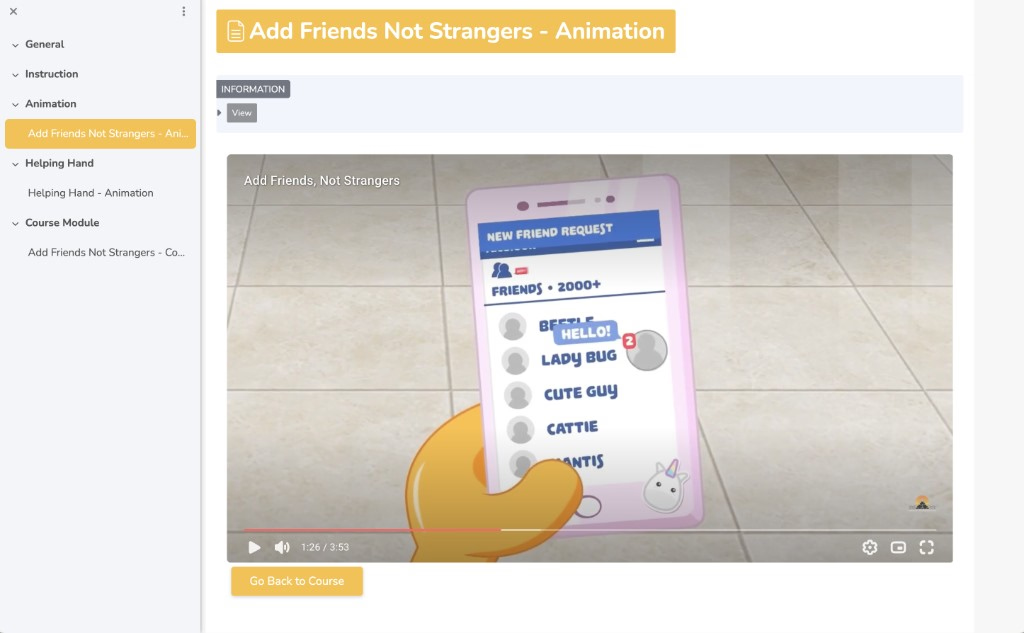
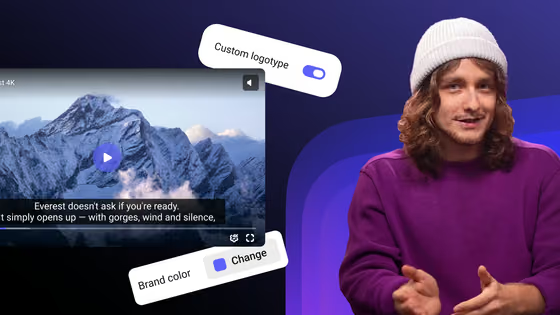
On top of that, the player could be stripped down to a clean, minimal look that matched the course design. And the videos loaded reliably across the Philippines. Ace, who sits on the management committee, made the call, and the committee agreed.
A migration Stairway did itself
There was no drawn-out rollout. Stairway subscribed within about two days of the call and handled the migration itself. The whole library is small, about 64 GB. Kinescope offered advice on bulk migration, but the team chose to upload in phases from its own storage instead, prioritizing the videos for active courses and adding the rest over time.
If someone has a basic understanding of drives, it’s almost impossible not to understand how to upload to Kinescope.
The pleasant surprise came later: automatic subtitles, including in Filipino, which were not available when Stairway first subscribed and arrived afterward. Ace rates their accuracy as surprisingly good.
The results
The first thing Ace mentions is not a number but the absence of trouble. For an organization whose films carry training that protects children, that reliability is one of the cornerstones.
We are very happy that we haven’t encountered any technical glitches with the videos hosted on Kinescope. For us, reliability is very, very important.
The pricing is what makes the rest possible. Because a usage-based bill rises and falls with real use, a modest, uneven streamer like Stairway pays for what it needs and no more, and the difference goes to work that matters more than video infrastructure.
The pricing Kinescope offered on standard rates gave us more flexibility to reinvest our resources into other matters, like the direct work with children in our shelter, or case-management costs for victims.
Even if it helps one child, that’s changing the course of a life.
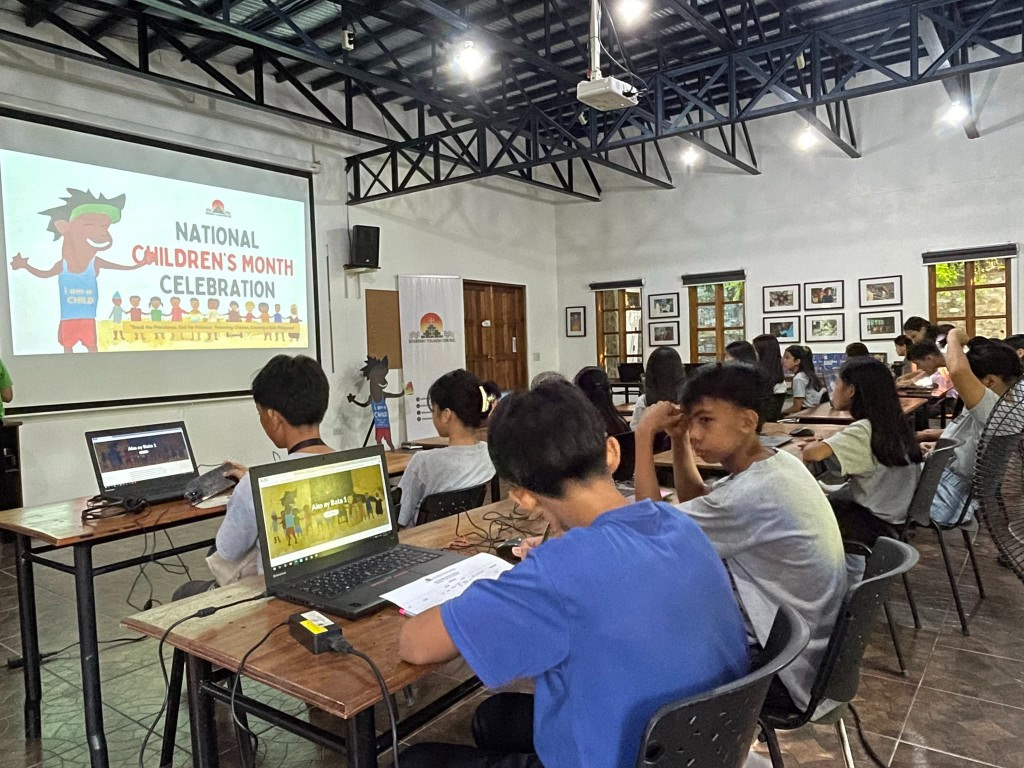
Kinescope also let Stairway keep delivering e-learning at a professional standard. The team had considered falling back on YouTube, where ads would intrude, or Google Drive, where embeds can be unreliable, and neither fit a serious course. A clean, customizable player and dependable playback meant the foundation did not have to compromise.
From our e-learning users, we haven’t had any feedback that the video isn’t loading or is slow. Nothing like that.
What’s next
Stairway is now exploring a learning app to deliver sessions directly to children, with video at its core. The open question is how to serve that video, embedded inside the app or streamed through Kinescope, with offline access and app size the constraints that will decide it. Wherever it lands, video stays central to how the foundation does its work.
Kinescope is not only a video hosting tool. Yes, it is one, but for us it’s part and parcel of the different tools made available to us to fulfill our protection advocacy mission. Kinescope is an enabler.
Run your mission on video you can rely on. We’ll handle the rest.
Kinescope takes care of hosting, delivery, security, and subtitles, with pricing that follows real usage, so teams can spend less on video infrastructure and more on the work that matters. Tell us what you’re delivering and we’ll price it on your numbers.