



















Vimeo alternatives for business: security and API compared




Kinescope includes DRM and API from €10 a month
If you run video for a business or build it into a product, Vimeo’s 2026 changes probably landed on your desk. The plans were restructured, several security features moved behind the Enterprise tier, and the company changed hands. None of that makes Vimeo a bad platform, but it’s a reasonable moment to check whether you’re paying for the right one.
This guide compares eight Vimeo alternatives on the criteria a business or developer buyer weighs most: content security, a real API, analytics, and a price that scales with usage rather than headcount.
Key takeaways
- One of the reasons teams leave Vimeo is price: the 2026 restructure moves many business accounts onto pricier tiers, often with a jump they didn’t plan for.
- Security is the second push: DRM, watermarking, and geo rules are available only on the custom Enterprise plan, above the self-serve tiers.
- For developer-led teams, the deciding factor is usually the API and SDKs, so weigh integration depth before the player and the design.
- A usage-based model is often the better fit for uneven traffic: platforms like Bunny Stream and Cloudflare Stream bill for what you stream, so cost tracks real use instead of headcount.
- Where your video data legally lives is a real selection criterion in Europe, and most of the big names are US companies.
- There’s no single best Vimeo alternative; the right pick depends on whether security, engineering, or marketing owns the decision.
Why teams are re-evaluating Vimeo in 2026
Vimeo is still a capable, polished platform, and for a lot of creators it’s the right home. What changed in 2026 is the fit, and the cost, for business use.
Price is what sent most business users looking
In 2026 Vimeo reworked its published plans and began classifying accounts by organization size and commercial signals, which pushes many businesses off the self-serve tiers and toward Studio, Production, or custom Enterprise contracts.
Legacy subscribers have reported automatic renewals at many times their old bill. The Bending Spoons acquisition in late 2025, followed by layoffs in January 2026, is the backdrop to those changes.
The complaints are loud and easy to find. One r/vimeo post describes a subscriber auto-moved from €15.60 to €120 a month, a 670% jump onto a Professional plan they never picked. “This is predatory. This is a scam,” the user wrote, and opened a PayPal dispute before leaving.
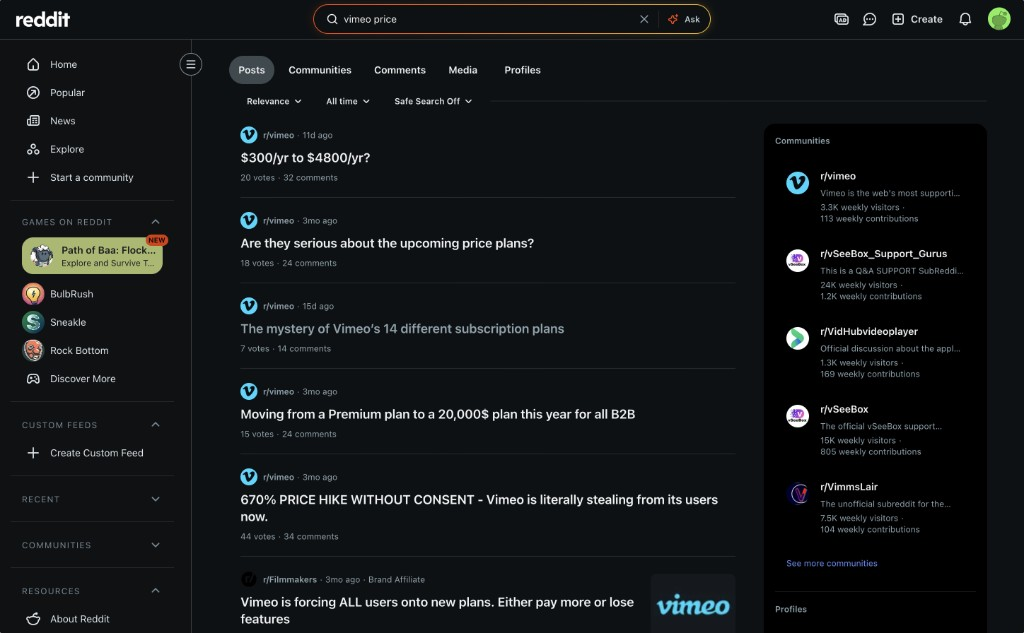
They are not alone: other r/vimeo threads describe the same forced move off legacy plans. The frustration predates 2026, too, with a 2023 r/Filmmakers thread about a Pro increase already full of people cancelling, one calling the hike “the last straw.” The throughline is consistent: users leaving for usage-based hosts. Teams that made that move to Kinescope have published the results: JoJoschool cut video costs roughly 10× and moved its catalogue in under a week, Proz Educação cut its bill 5×, and Conted Tech cut costs by 75%.
The security you need for paid content is Enterprise-only
Vimeo’s self-serve plans do cover the basics: 2FA, password protection, unlisted links, embed domain-level privacy, and access restriction are all on Starter (13 €/mo) and up. The gap is the protection that paid or confidential video really depends on. DRM, geo-blocking, a custom subdomain, data residency, and audit logs are all reserved for the custom Enterprise plan.
For a course business or an internal-comms team, the one feature that stops downloads (DRM) is unavailable at any self-serve price, which turns a 13-to-115 €/mo decision into a sales call.
The limits stack up: bandwidth, seats, and storage
All three self-serve tiers carry the same 2 TB monthly bandwidth cap, so paying more for Standard or Advanced buys storage and seats but no extra headroom to serve video. Exceed the cap and Vimeo moves you toward a custom Enterprise contract.
Storage and seats are the only things that scale: 2 TB and one seat on Starter (13 €/mo), 4 TB and five on Standard (31 €/mo), 7 TB and ten on Advanced (115 €/mo), about 40% cheaper annually. Pricing is per seat, so the bill grows with your team even when viewing is flat.
What to look for in a Vimeo alternative
Before the table, it helps to name the four things that separate these Vimeo alternatives for a business or developer buyer.
A cost model that scales with usage
Seat-based pricing suits teams; usage-based pricing (per GB or per minute) suits products with uneven traffic. Neither is better in the abstract; the mismatch is what hurts. A marketing team with five editors and modest views wants seats, while a SaaS product serving millions of minutes wants to pay for delivery.
Protecting the video itself
Password and domain restrictions guard the page a video lives on; they don’t encrypt the stream. Anyone with a browser extension can pull an unprotected file. Real protection means DRM (Widevine and FairPlay), signed and expiring links, and a watermark burned into playback. If you sell courses or host confidential material, this is the first column to read.
An API and SDKs to build on
If video lives inside your product, the player is the easy part. What matters is a REST API for uploading and managing video, SDKs for your platforms, and webhooks so your backend knows when a video is ready or watched. A developer-led team should weigh integration depth before it looks at the design.
Where your data lives
For European buyers, jurisdiction is a real criterion. A platform can store files in the EU and still fall under US law if its parent company is American, which brings the CLOUD Act into scope. If a legal or compliance team is in the room, note which vendors are EU-governed, since EU hosting alone doesn’t place them under EU law.
The Vimeo alternatives at a glance
Here’s how eight platforms compare on the security and developer criteria above. Prices are the published starting points; read them alongside each platform’s section, since a starting price rarely reflects a real bill. For the wider market beyond Vimeo’s rivals, see best video hosting in 2026, which sorts ten platforms into API-first, general-purpose and ecosystem hosts.
| Platform | Starting price | DRM (Widevine/FairPlay) | Signed / expiring links | Domain & geo rules | Watermark | REST API + SDKs | Webhooks | Per-video analytics | Data in EU |
|---|---|---|---|---|---|---|---|---|---|
| Vimeo | 13 €/mo | Enterprise only | Partial | Domain all tiers, geo Enterprise | Enterprise only | Limited / Enterprise | Partial | Paid tiers | US (EU only for Enterprise) |
Kinescope Best fit |
from €10/mo | Base plan | Yes | Yes | Dynamic | Full + Tus, SDKs | Yes | Watch-depth | Yes (EU / NL) |
| Wistia | ~€73/mo | No | Page-level only | Referrer / domain | No | Yes | Yes | Yes (marketing) | No (US) |
| Bunny Stream | Usage-based; free transcoding | Yes* | Token | Referrer, geo | Yes | Full + Tus | Yes | Heatmaps | Yes (EU) |
| Gumlet | Free; from ~€5.50/mo; DRM +~€91 | Add-on | Yes | Yes | Dynamic | Yes | Yes | Yes | Regions vary |
| Cloudflare Stream | Usage; ~€4.60/1k min stored + ~€0.92/1k delivered | No | Signed tokens | Allowed origins | Partial | Yes | Yes | Basic | Global (US co) |
| Mux | Usage per-min; DRM +~€92/mo + ~€0.0028/license | Add-on | Signed playback | Yes | Partial | Yes (dev-first) | Yes | QoE (Mux Data) | No (US) |
| api.video | Usage; free encoding | No (AES only) | Yes | Yes | Yes | Yes (dev-first) | Yes | Basic | Yes (France) |
* = plan- or configuration-dependent. Features and prices were checked against each vendor’s own pages in July 2026 and change often; some competitor prices are billed in USD and shown as approximate euro conversions at about €0.92 per USD, so confirm current local pricing with each vendor. Kinescope prices natively in euros.
Vimeo: still the right call for some teams
Start with the incumbent; leaving makes sense only if Vimeo is holding you back. Vimeo’s player is genuinely good, its review tools are strong, and free viewer seats keep client work affordable. If your use is creative showcases, client review, or OTT monetization, Vimeo remains a sound choice.
Vimeo is closing Vimeo On Demand, its marketplace for selling and renting videos directly: new purchases end 21 September and the service shuts down 20 November 2026 (Vimeo’s shutdown notice, 2026).
The friction is business use: security lives on Enterprise, the 2 TB cap can force an unplanned upgrade, and per-seat pricing grows with the team. Our Kinescope vs Vimeo breakdown goes deeper on the head-to-head.
Kinescope: security and API in the base plan

As a Vimeo alternative, Kinescope is built for the case this guide keeps circling back to: business and developer teams that need the video protected and the platform programmable, without moving up to an enterprise contract to get either.
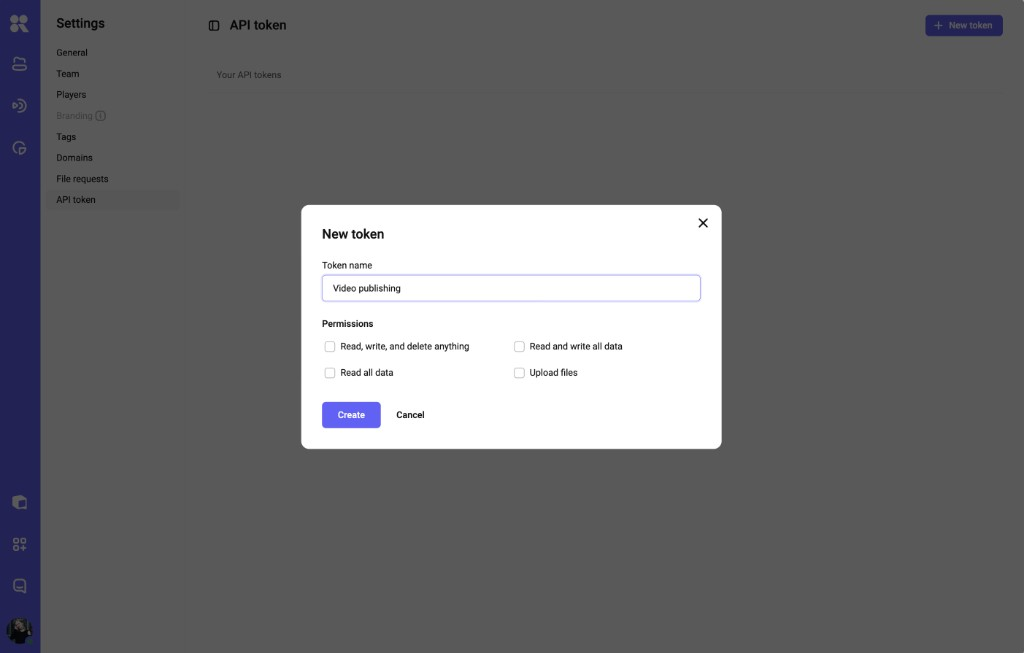
On security, DRM with Widevine and FairPlay is included in the video platform from the base plan rather than gated behind a custom tier, alongside signed and expiring links, domain and geo rules, and a dynamic, per-viewer watermark. On the developer side, there’s a full REST API with resumable Tus uploads, webhooks for events, an authorization backend that grants access by your own rules (courses, subscriptions, roles), and player SDKs for iOS, Android, and web.
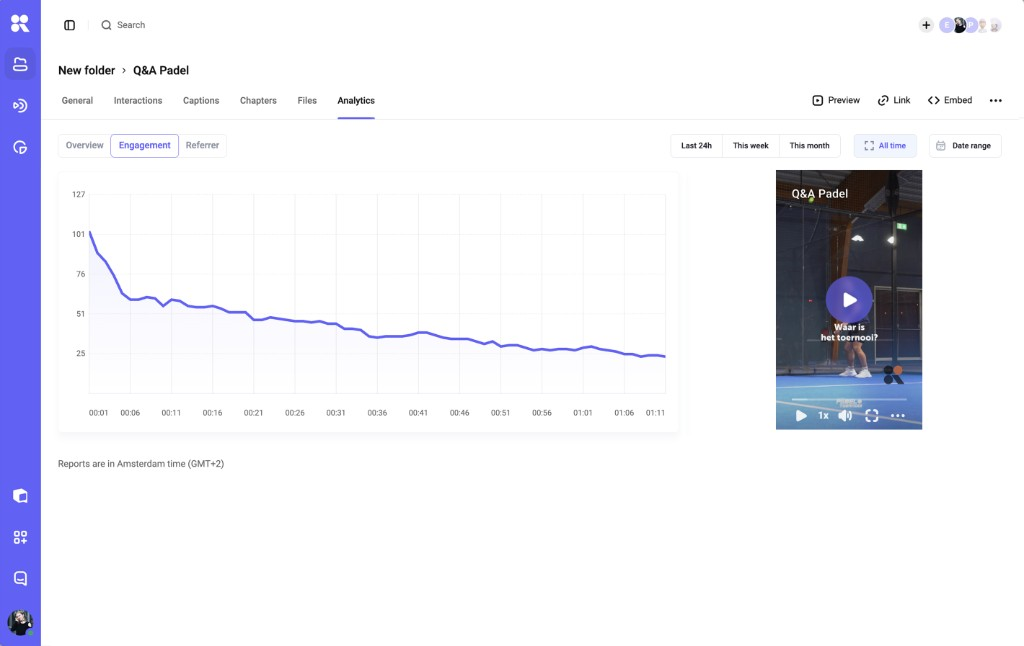
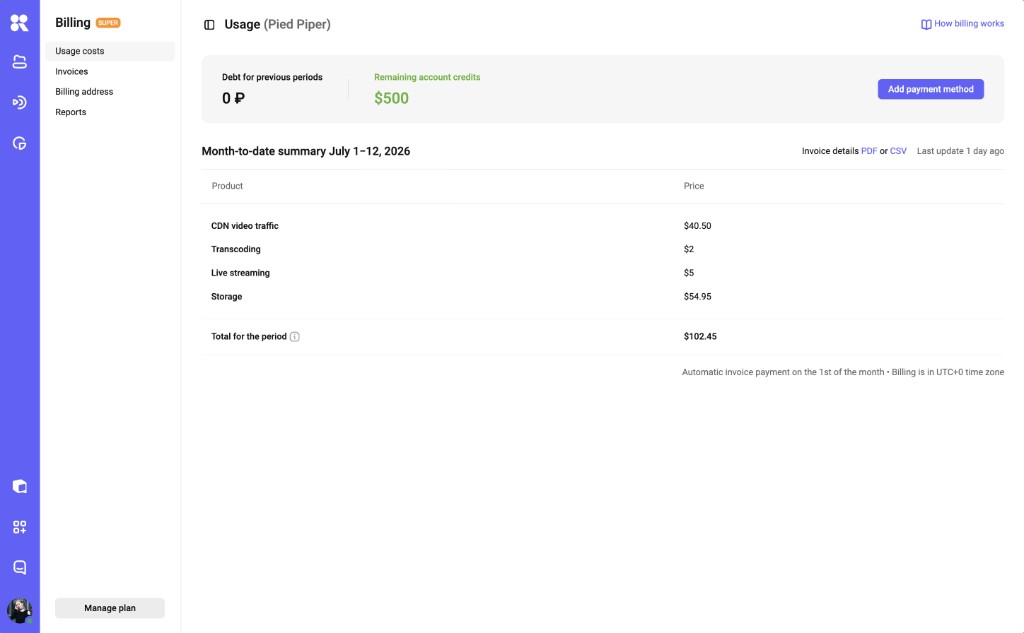
Analytics report per-video watch depth, geography, and platforms, and export to CSV or XLSX. The player is clean, ad-free, and white-label, and pricing is a floor model: from €10 a month, a monthly minimum that already covers your usage up to that amount, then €0.03 per GB for storage and delivery with rates dropping at volume, plus a one-time transcoding charge at upload.
The honest limits: the on-screen CTA is a single button, so true interactivity (a branching, in-video quiz) means adding an authoring tool alongside; the SDK set covers iOS, Android, and web, so a Flutter or React Native team will wrap the web SDK; and Kinescope runs a smaller sales organization, without a 24/7 phone line.
What Kinescope does bring for European buyers is EU-based hosting: Kinescope B.V. is a Netherlands-registered company, with master video files stored in the EU. On Vimeo, EU video data residency is available as an Enterprise option; metadata, account information, analytics, and logs remain outside the EU.
For a fuller checklist of what a secure host should do, our secure video hosting guide goes deeper, and the Kinescope vs Vimeo page covers the direct comparison.
Wistia: marketing analytics first
As a Vimeo alternative, Wistia is built for marketing teams, and it’s excellent at that job. Per-viewer heatmaps, lead-capture forms that gate a video on an email, and native HubSpot, Marketo, and Pardot integrations are its real differentiators. If turning video into pipeline is the point, Wistia is hard to beat. Already on Wistia and weighing a move? The Wistia alternatives breakdown compares eight options on real cost and DRM.
The catch for secure content is direct: Wistia has never offered DRM, on any plan. Its protection is limited to passwords, domain restrictions, and referrer controls, which guard the page but leave the video file itself exposed.
Pricing also jumps from a free tier straight to the Business plan at about €73 a month, with extra seats billed on top. For a marketing library it earns its keep; for paid courses, it falls short. Our Kinescope vs Wistia page covers the head-to-head.
Bunny Stream: infrastructure and cost control
Bunny Stream is the value-focused Vimeo alternative. Transcoding and the player are free, and pricing is usage-based, so the bill tracks what you actually store and deliver. It ships adaptive streaming, a customizable player, signed tokens, referrer and geo rules, heatmap analytics, and a full API with resumable Tus uploads. It’s also EU-based, out of Slovenia.
One honest caveat on security: Bunny’s basic DRM uses clear-key encryption, which blocks casual downloading, while true Widevine and FairPlay protection with screen-recording defense is its MediaCage Enterprise tier. If DRM is a hard requirement, confirm you’re comparing the Enterprise option. Bunny is the strong pick when bandwidth cost and CDN control dominate the decision, and you’re comfortable managing videos in its dashboard; our Kinescope vs Bunny page runs that comparison.
Gumlet: DRM without an enterprise contract
Gumlet is the Vimeo alternative that has aimed squarely at the security gap. It has a free tier and paid plans from about €5.50 a month, with full multi-DRM (Widevine and FairPlay) as an add-on at roughly €91 a month, dynamic watermarking, and SOC 2 and ISO 27001 certifications that formal procurement teams often require. For a course or media business that needs certified, encrypted delivery without an enterprise negotiation, it’s a credible option.
The trade-off is that DRM is a paid add-on on top of the base plan, so model the combined bill. On data residency, Gumlet operates across regions, so European buyers should confirm where their master files sit.
Cloudflare Stream: simplest if you’re already on Cloudflare
Cloudflare Stream strips hosting to the essentials: upload, auto-transcode, deliver. Pricing is refreshingly simple at about €4.60 per 1,000 minutes stored plus €0.92 per 1,000 minutes delivered, with encoding included. Signed tokens, allowed-origin rules, webhooks, and a clean API come standard, and if your stack already runs on Workers and R2, adding video takes little more than a configuration change.
The limitation matters for this audience: Cloudflare Stream offers no DRM, and delivery caps at 1080p. For product demos, tutorials, and internal tools it’s a strong, low-friction default. For encrypted paid content, it’s the wrong tool.
Mux: the developer’s video API
Mux is the Vimeo alternative engineers reach for. The API is clean, the SDKs are broad, per-second billing avoids round-ups, and Mux Data gives quality-of-experience analytics few match at that depth. Widevine and FairPlay DRM are available, signed playback tokens are standard, and a cold-storage discount helps large libraries.
Two things to weigh. Mux is usage-based across encoding, storage, and delivery, so a media-heavy product should model it carefully; the richest analytics need the paid Mux Data tier, and DRM is an add-on (about €92 a month plus a small per-license fee). Mux is also a US company, which matters if EU data residency is a requirement. For a video-native product that wants the best developer experience, Mux is the benchmark.
api.video: pay-as-you-go and EU-based
api.video is positioned close to Mux but leans simpler: encoding is free, you pay for hosting and delivery, and it ships a clean API, webhooks, watermarking, and low-latency live. On protection it uses AES encryption rather than Widevine/FairPlay DRM, so it’s not for content needing studio-grade DRM. It’s also a French company, which puts it inside EU jurisdiction.
Where it’s lighter than Mux is analytics depth and per-title encoding intelligence. If you want a straightforward, EU-based video API and don’t need deep quality-of-experience metrics, api.video gets you to production quickly.
When you need something other than a host
A few names in Vimeo-alternative searches fall outside this comparison, solving a different problem.
Vidyard is a sales tool for one-to-one video sent by reps, built for outreach, with product hosting outside its scope. Frame.io is a review-and-approval workspace for production teams, now part of Adobe.
YouTube and Dailymotion are free and unbeatable for reach, but they run on public discovery, show ads and recommendations, and open the video to anyone with the link. If one matches your job, it beats any host for that need.
How to choose, by who owns the decision
The right Vimeo alternative usually falls out of who’s making the call.
If security drives it
You need DRM, watermarking, and signed delivery as table stakes. Kinescope includes them from the base plan, Gumlet offers certified DRM as an add-on, and Bunny covers it at its Enterprise DRM tier. Cross Wistia and Cloudflare Stream off this list (no stream encryption); api.video protects with AES only, not Widevine/FairPlay. For a course-specific checklist, see our guide to video hosting for online courses.
If engineering owns it
Weigh API quality, SDK coverage, and webhooks first. Mux sets the developer-experience bar, api.video is the simpler EU-based option, and Cloudflare Stream is the natural pick if you already live on Cloudflare. Kinescope fits when you want that programmability plus DRM in one product.
If marketing owns it
Lead capture, CRM integration, and engagement analytics matter more than encryption. Wistia is purpose-built for that, and Vimeo’s player and collaboration tools serve client-facing work well.
The switch is smaller than the lock-in fear
Most teams stay on a platform too long for one reason: the dread of migrating a library. In practice, it’s usually a bulk export and an embed-code swap, and several of these platforms pull your catalog over with metadata intact.
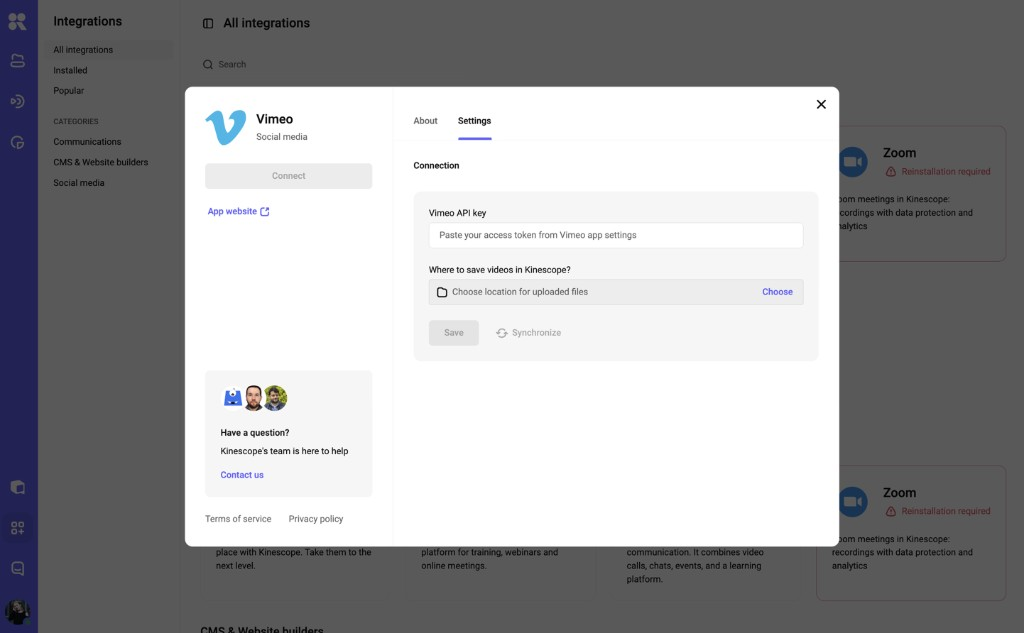
Kinescope, for instance, offers assisted migration on its paid plans and a demo call to plan it. Pick the Vimeo alternative that fits the next three years, rather than the one that’s easiest to leave.
If security and a predictable bill are pushing you off Vimeo, Kinescope is built for that case: DRM, geo rules, and per-video analytics from the base plan, priced by usage on a €10 floor.