














How to stop video piracy: a practical guide for creators




To stop video piracy, you layer a few controls: encryption that blocks the download, signed links and domain rules that cut off shared access, and watermarking that traces whatever still leaks. No single setting does the whole job, and default hosting rarely switches any of them on.
This guide walks the stack in the order that matters, and what to do once a copy is already out.
New here? Our explainer what anti-piracy is and how it works covers the concepts; this guide is the hands-on version.
How video gets pirated in the first place
Most video piracy runs on a handful of routine methods that need no real hacking skill.
Browser extensions and tools like yt-dlp pull the file straight off a page, while shared or resold links hand access to people who never paid. Someone screen-records during playback, and the copy gets re-uploaded to a Telegram channel, a shared drive, or a torrent, where each new upload spawns another.
Knowing which of these hits you decides where to spend effort. A paid course leaks differently from a live sports feed, but the entry points are the same short list — the file, the link, the session, and the screen.
Set up the stack that stops most video piracy
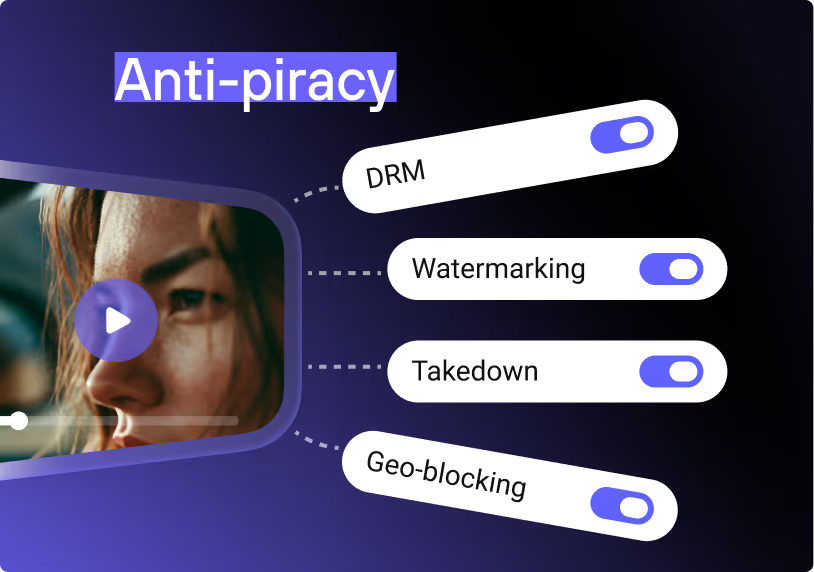
Kinescope supports the four protection layers below. Set them up in this order so each addresses an entry point the previous layer leaves open:
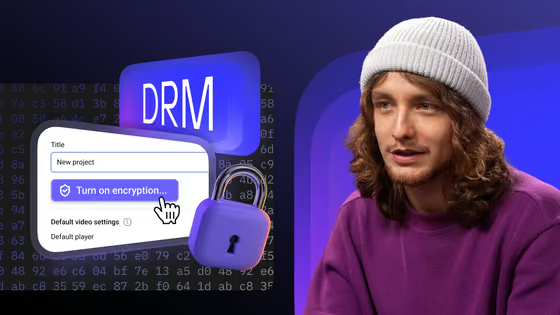
- DRM encryption — encrypts the stream so only authorized devices decrypt it, using Widevine (Android, Chrome) and FairPlay (Apple). This is the layer that kills the download.
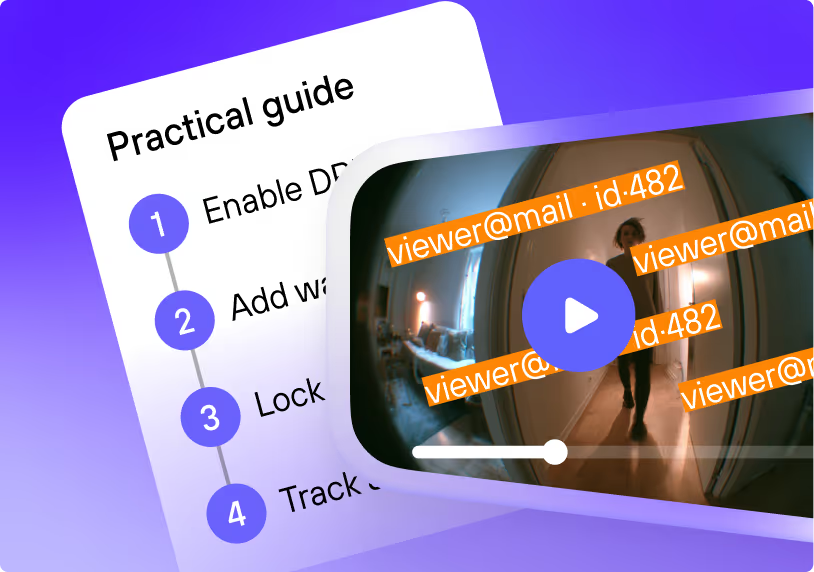
- Dynamic watermarking — burns a per-viewer ID into the picture, so any leaked copy traces back to one account.
- Domain restriction — the player loads only on domains you approve, so the embed can't run on a site you don't control.
- Signed, expiring links — access tokens that die after a set window or number of plays, so a shared link is worthless within hours.
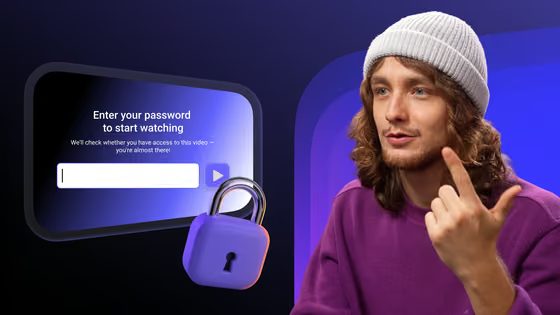
Access controls work alongside these: a password, login, SSO, or concurrency limit binds each session to a real person, curbing credential sharing.
Kinescope includes Widevine and FairPlay on every paid plan, so the first layer does not depend on a separate DRM add-on.
What each layer stops, and what it misses
| Layer | Stops | Misses |
|---|---|---|
| DRM encryption | Downloads and extraction (yt-dlp, VLC, ffmpeg); screen capture of protected playback on modern devices |
A phone filming the screen |
| Dynamic watermarking | Traces rather than blocks | The capture itself; it names the leaker afterward |
| Domain restriction | The embed loading on sites you didn't approve | Capture by a viewer who's allowed in |
| Signed, expiring links | Shared and resold links | Anything an active, authorized session does |
No layer is complete alone. Encryption is the strongest (how video DRM protection works), but every layer shares one gap — the "analog hole." A second phone can film the screen, and no technology stops that. Watermarking covers it: a per-viewer ID stays in the picture, so a filmed copy still traces back to one account.
Realistic protection changes the economics of theft rather than promising to end it — remove the trivial download, make shared links worthless fast, and turn every leak into something you can trace.
Protect a paid course: what to turn on
Paid courses are the most common target, and the default video on all-in-one course platforms is usually the weak point — that hosting rarely offers real DRM or per-viewer watermarks. Our video hosting for online courses supports both. Two moves matter most beyond the stack above: tie the watermark to each enrollment, so a leaked module names the buyer who shared it; and cap concurrent streams per login, since the classic leak is one paid account serving a study group. Search your title on Telegram and Google now and then — stolen courses surface there first.
What to do when your video is already leaked
Prevention is only half the job. No protection system can prevent every leak, whether you use Kinescope's anti-piracy protection or another solution. When a copy surfaces, work through these four steps:
- Find the source. Open the leaked file and read the watermark: it carries the ID of the account that streamed it, which tells you which login to suspend and whether it was one leaker or a resold account.
- Kill the working links. In your video host, revoke that account's active tokens and rotate the signing key so any links already scraped go dead.
- File the takedowns. Send a DMCA notice to wherever the copy lives: the video host, the file locker, and the search result for it. Compliant platforms (YouTube, Google, most hosts) remove it on a valid notice, usually within days.
- Watch for the re-upload. Closed channels like Telegram rarely honor notices, so set an alert for your title and re-file each time it resurfaces — the watermark keeps every fresh copy traceable.
Video piracy protection works in layers
You can't make video piracy impossible, because any screen can be filmed. What you can do is make it not worth the effort: block the download, expire the links, lock the domains, and watermark every stream so the copies that escape lead back to a name. Match the stack's strength to what the content is worth, and keep takedowns ready for what gets through.
If the video earns money, run these layers on a platform built for it rather than bolting them onto default hosting — Kinescope keeps encryption, access rules, and watermarking on the same video, live inside every embed.