














What is anti-piracy? Methods that work in 2026



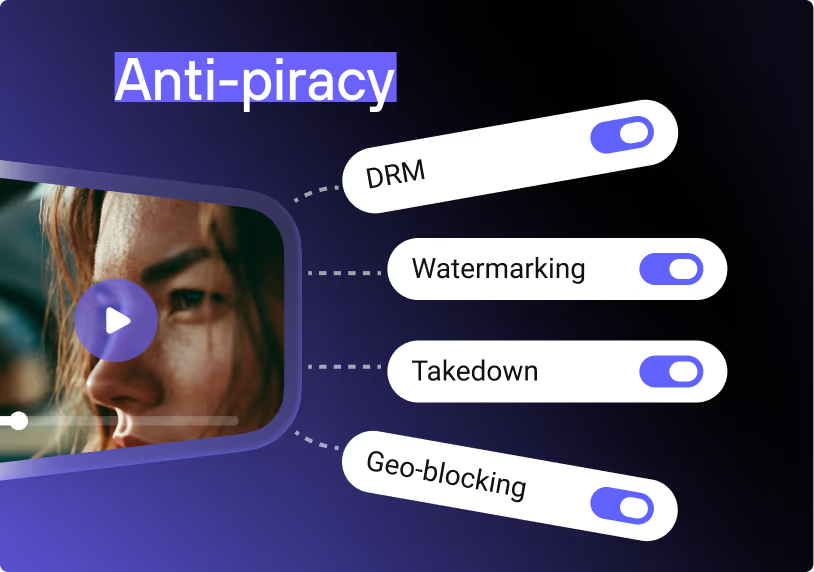

Anti-piracy is the set of controls that keeps paid video from being copied, re-uploaded and watched for free: DRM that encrypts playback, watermarks that tie a leak to the account it came from, monitoring that finds copies in the wild, and takedowns that remove them. No single control covers all four jobs, which is why protection is assembled as a stack rather than bought as one feature.
A pirated video rarely enters the world through one spectacular breach. More often, it begins with a legitimate playback session: a customer shares a link, a downloader collects an unencrypted stream, or a screen recording leaves an account that was allowed to watch. By the time the copy appears on a public platform, several different controls have already had a chance to fail.
Anti-piracy is the system around that journey. It limits what an authorized session can expose, leaves evidence inside copies that still escape, searches for those copies, and provides a route to remove them. The controls are complementary because they operate at different moments: DRM cannot search the web, a crawler cannot encrypt a file, and a takedown cannot identify the account behind an anonymous recording. Kinescope covers the first two: its anti-piracy software for video encrypts playback with DRM and marks every frame with the viewer's identity, while finding copies and taking them down is work for monitoring services.
This guide follows the copy from playback to removal. We'll overview the technologies behind video protection, the monitoring workflow after a leak, and the different services a content owner may need to run both.
How anti-piracy works
A useful anti-piracy program has four jobs: control access, protect playback, attribute a leaked copy, and contain its distribution. Those jobs form a sequence — just rarely in a neat order. A public re-upload may surface before its source is known; while the host reviews a removal request, the watermark may already point to the customer account and provide enough evidence to revoke that account's access, even though copies remain online.
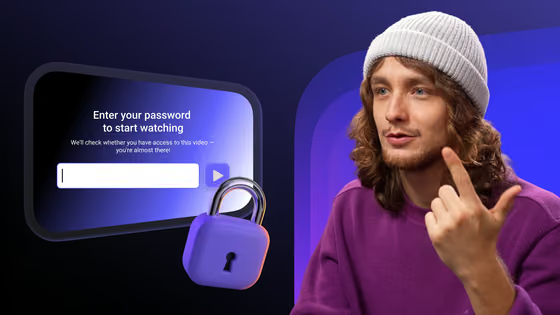
A login, subscription check, one-time code, short-lived token, or private-link policy decide whether the viewer is entitled to start a session. They all prevent broad public access, yet say nothing about what the authorized viewer can do after playback begins.
Once it begins, protection shifts to the media itself. DRM encrypts the stream and gives a usable licence only to an approved player and device, while domain rules prevent a copied embed from running on an unrelated site. These controls reduce the easiest forms of copying and redistribution, but none can stop someone pointing another camera at the display.
That external camera leaves a different kind of problem — the recording exists, but its source is unknown. A watermark carries information about the account or session into the picture, so the copy can lead back to its source. Monitoring and enforcement then deal with distribution: matching systems locate likely copies, a reviewer separates infringement from licensed or lawful uses, and the rightsholder asks the host or platform to remove confirmed cases.
Closing a case requires those controls to share evidence. A detected copy must be tied to an account before access can be revoked, and the removal record must feed back into monitoring so the same material can be recognized when it resurfaces.
Anti-piracy technology and its limits
Anti-piracy technology is easiest to evaluate against a specific route of loss. A downloaded stream, a shared playback link, a copied embed, a screen recording, and a public re-upload are different events. Each requires a different control, and each control leaves a known opening.
DRM: Widevine, FairPlay, and PlayReady
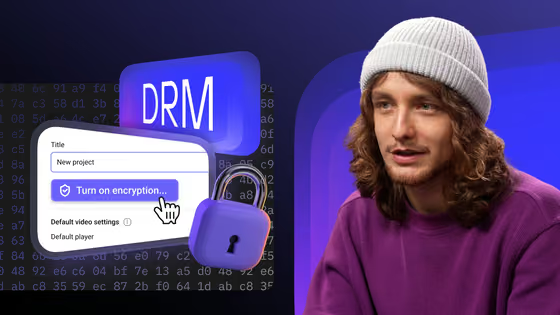
Digital rights management changes what crosses the network. Instead of receiving media that another player can immediately decode, the viewer receives encrypted segments. The authorized player then asks a content decryption module for a licence, and the licence service decides whether that session may receive the key. On the web, the exchange runs through the W3C's Encrypted Media Extensions API. The application still controls entitlement, while the content decryption module supplies the DRM implementation.
Device coverage is split among three common DRM systems:
- Google's Widevine covers Android and the major non-Safari browsers.
- Apple's FairPlay protects HLS playback in Safari, iOS, iPadOS, and tvOS.
- Microsoft's PlayReady matters most in native Windows and Xbox applications, set-top boxes, and parts of the Smart-TV market.
A browser-and-mobile service normally needs Widevine plus FairPlay; a living-room or native-app product may need PlayReady as well. The device map is covered in detail in our guide to Widevine, FairPlay, and PlayReady.
Kinescope includes Widevine and FairPlay on every paid plan, which is the browser-and-mobile pair most catalogues need; PlayReady remains a separate procurement for living-room and native-app coverage.
DRM stops a copied network stream from becoming a normally playable file because the copy does not include a reusable decryption licence. Hardware-backed sessions can also keep decrypted frames away from ordinary operating-system capture paths, producing a black recording on supported devices. This protection varies by session: software-only browsers provide a weaker boundary, and an external camera remains outside the device entirely.
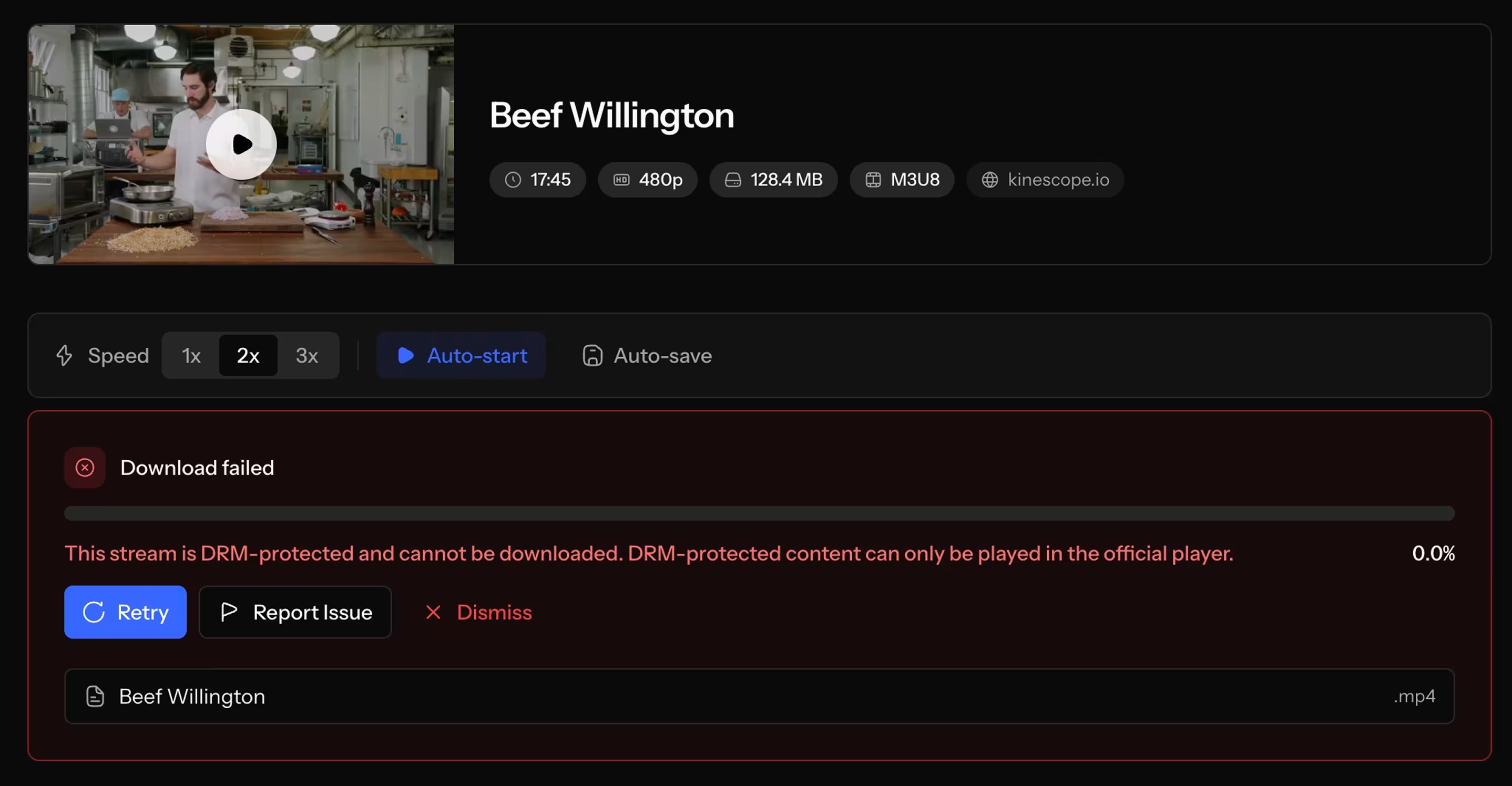
DRM also does not decide whether a paying user should still have access tomorrow. That belongs to the application or authorization backend. Encryption cannot identify which viewer made a recording. It creates a strong barrier against download-and-redistribute piracy; a complete investigation needs other evidence. For a closer look at the download path, see how video DRM blocks ordinary download tools.
Forensic watermarking
A forensic watermark inserts a session or account identifier into the video in a form designed to survive redistribution. The identifier can be spread across frames or variants so that an extractor can recover it after compression, scaling, cropping, or capture, provided the implementation has been tested for those transformations. MovieLabs' Enhanced Content Protection specification treats third-party robustness testing as part of the requirement; merely placing text in a corner does not meet the same standard.
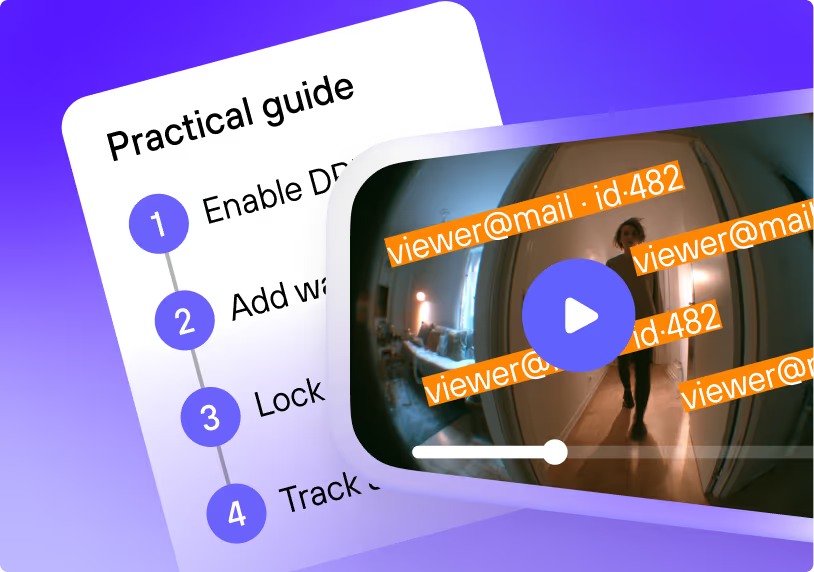
That distinction matters because “watermark” covers several purposes. A static logo establishes branding. A visible dynamic watermark can show an email address or user ID and move around the frame, which deters sharing and makes the source obvious when the mark remains visible. An invisible forensic mark is built for machine extraction from a recovered copy. Both visible and forensic watermarks support attribution, but their resistance to removal is different.
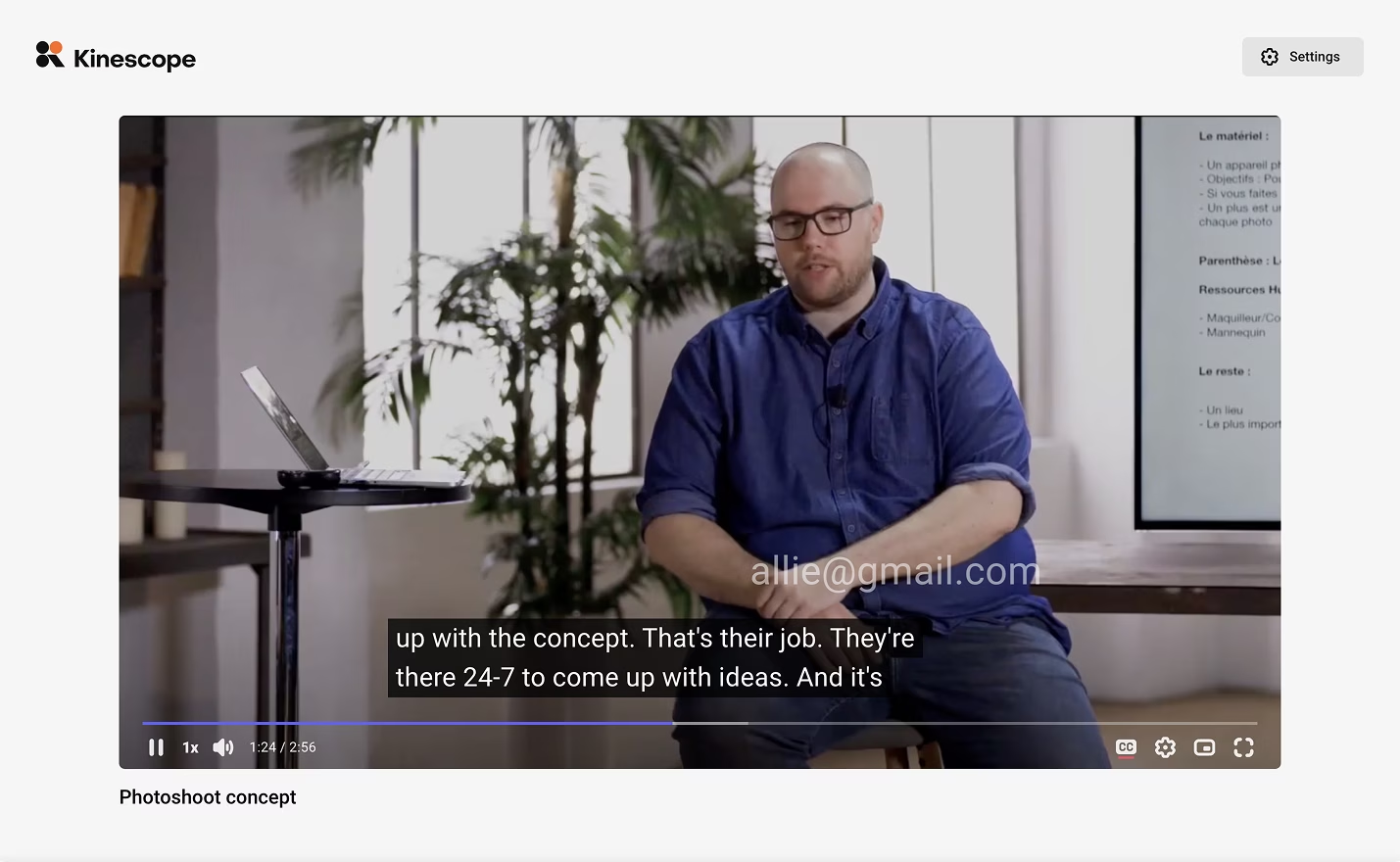
Watermarking stops no capture by itself. Its value begins after a recording exists: the operator extracts the identifier, maps it to a session, preserves the evidence, and can revoke the associated account or investigate credential sharing. It covers the analog hole left by DRM and works alongside encryption. Our forensic watermarking guide explains the insertion and recovery process.
Session tokens and signed URLs
Tokens narrow the period and context in which playback is valid. A session token can bind a request to a user, course enrolment, subscription, device, or expiry time. An authorization backend checks those facts before playback or before a DRM licence is issued. Revoking the entitlement then prevents a new authorized session even if someone still has the page URL.
A signed URL protects a resource differently. Its signature proves that a trusted application created the link, while its policy may set an expiration time and other conditions. This is useful for stopping a permanent media URL from circulating, while data already delivered remains available. CloudFront's documentation, for example, notes that a download started before expiry may finish. Streaming formats make repeated segment requests, so short validity still reduces reuse, but encryption is what makes collected segments unusable outside the licensed player.
Tokens also inherit the security of the application around them. Long expiries, tokens exposed in logs, predictable identifiers, and authorization checks performed only in the browser weaken the control. The sensitive decision belongs on a backend the viewer cannot rewrite.
Domain whitelisting and geoblocking
Domain whitelisting answers where a player may be embedded. The video service checks the requesting page against an approved list and refuses playback elsewhere. This closes a common redistribution route in which another site copies an iframe and lets the original owner pay for delivery. It does not stop a viewer on an approved domain from recording the video, and it does not replace user authentication.
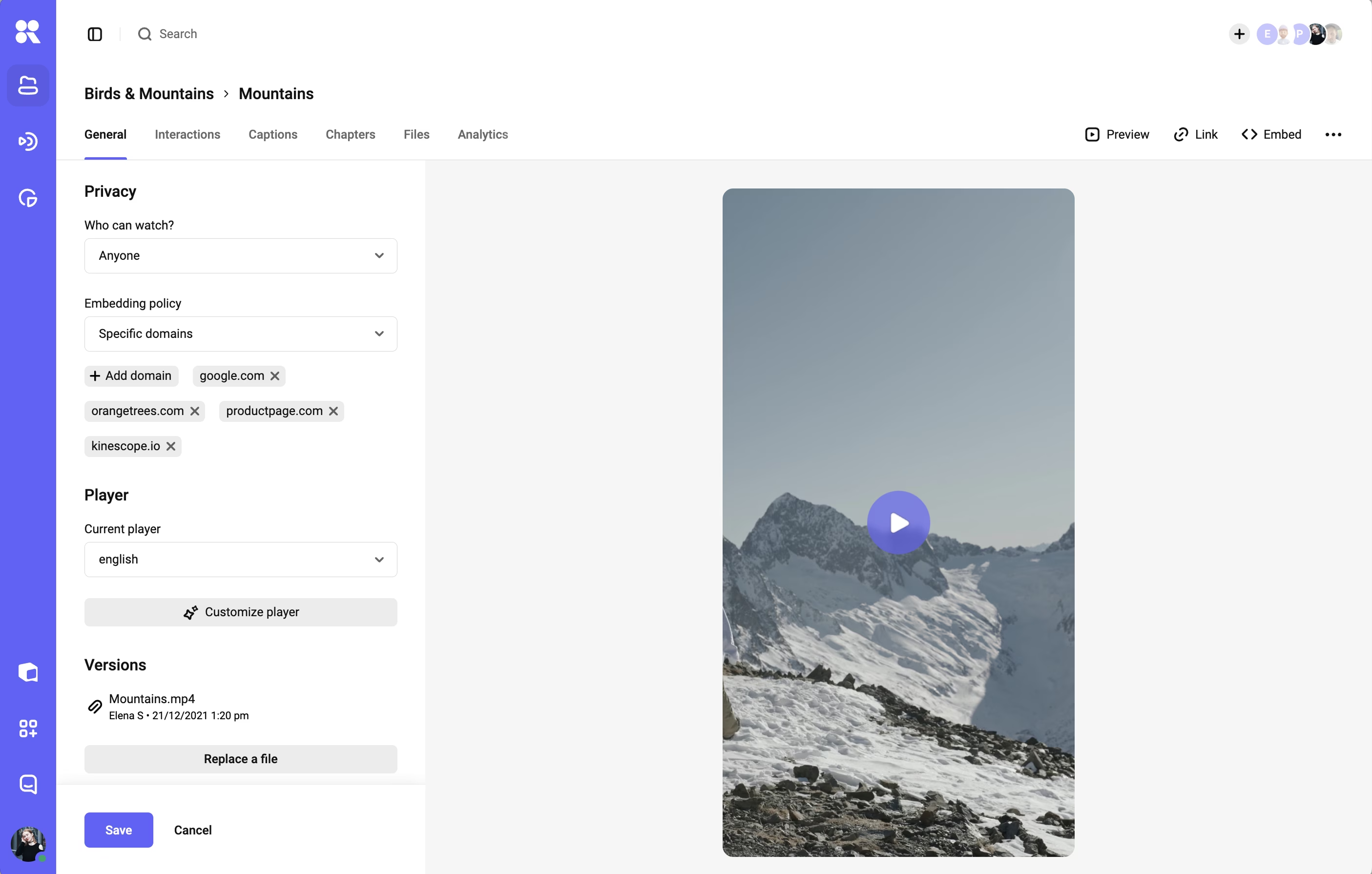
Geoblocking answers a licensing question, while ownership remains unchanged. It allows or denies playback according to the viewer's inferred location, commonly from the request's IP address. Broadcasters use it when rights differ by territory; companies may use it to keep internal media within an expected region. VPNs, proxies, mobile routing, and inaccurate location data limit the precision, while a permitted viewer can still leak the content.
Anti-piracy measures compared
The same control can be essential in one distribution model and irrelevant in another. This table separates the event each measure addresses from the event it leaves untouched.
| Method | How it works | Stops | Doesn't stop |
|---|---|---|---|
| DRM (encryption) | Encrypts the stream so only authorized devices decrypt it at playback | Downloading, file extraction with tools like VLC or ffmpeg, and screen capture of protected playback on modern devices | Someone filming the screen with a second camera |
| Dynamic watermarking | Burns a viewer-specific ID into the picture | Little on its own, but traces a leaked copy back to the account it came from | The capture itself; it identifies the source after the leak |
| Takedowns (DMCA) | Legal notices sent to hosts, platforms, and search engines | Public distribution on compliant platforms such as YouTube and Google | Quick reappearance elsewhere; closed channels like Telegram are slow to act |
| Geoblocking | Restricts playback by region | Access from territories where the content isn't licensed | VPN users, and it does nothing about theft inside allowed regions |
No row replaces another. The practical stack follows the content: authorize the viewer, protect the session, retain an attribution signal, watch the relevant distribution channels, and keep an enforcement path ready.
Anti-piracy monitoring from first match to removal
Monitoring combines crawling with an evidence workflow. A useful service knows what it is searching for, records where and when a match appeared, gives a reviewer enough context to judge it, and keeps the case open after the first URL disappears.
Build a reference library
Detection begins with clean reference material. The system may fingerprint audio, frames, or both, then attach ownership and release metadata: title, episode, territory, publication date, authorized channels, and the entity allowed to enforce the rights. That context prevents a distributor's licensed upload from looking identical to a pirate copy in the case queue.
The reference also defines coverage. YouTube's Copyright Match Tool looks for full or near-full reuploads posted after the original and warns that short clips may not surface. Other systems tolerate different crops, edits, dubbing, or overlays. “Fingerprinting” alone says little unless the vendor explains the media types, transformations, languages, sites, and private or public surfaces it actually scans.
Review a match before acting
A similarity score supplies a lead; a legal conclusion requires review. The same footage may belong to an authorized affiliate, a syndication partner, a reviewer quoting a short excerpt, or a channel operating under a licence. Public-domain and copyright-exception questions also require judgment. YouTube therefore asks rightsholders to review potential matches and does not treat upload order as proof of ownership.
The reviewer needs the matched interval, source URL, uploader, publication time, audience or view count where available, and the relevant licence record. High-impact full copies can be prioritized over low-view snippets without pretending the latter do not exist. A defensible queue reduces false notices and preserves attention for the copies causing real distribution or revenue loss.
Trace the source of a leak
Once a copy is confirmed, the investigation moves backward. If it contains a forensic watermark, the service extracts the identifier and maps it to the playback session. A visible dynamic mark may allow the same lookup by inspection. Session logs can then connect the mark to an account, time, device, or entitlement decision.
That evidence supports a response beyond removing one URL. The content owner can suspend an account, expire its tokens, investigate unusual concurrent sessions, or correct a reseller's permissions. Attribution should still be handled carefully: an account may have been compromised, shared within an organization, or accessed from a managed device. A watermark identifies the session source of the copy; it does not by itself prove which person operated the recorder.
Send the right notice
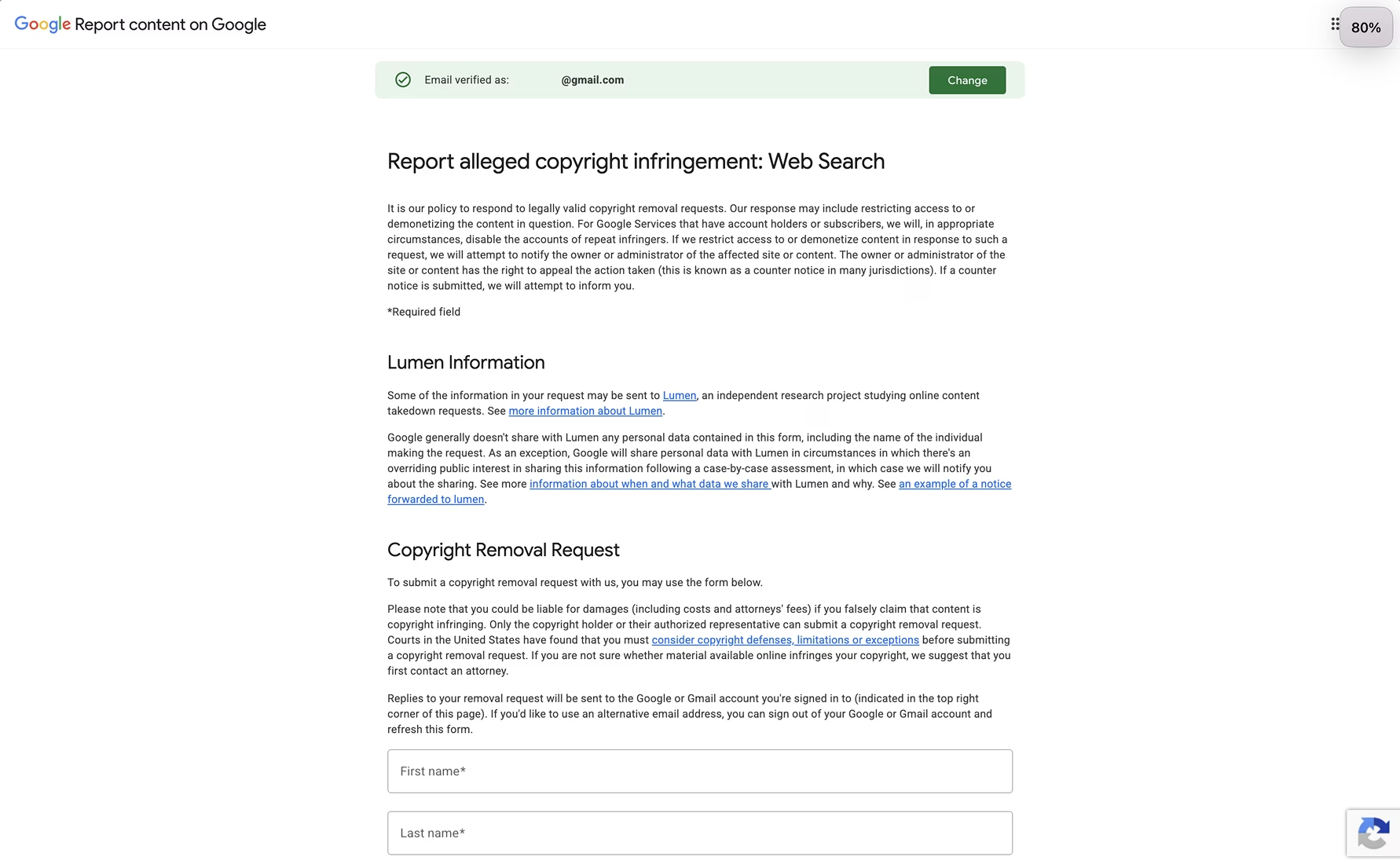
For a U.S.-based service provider, a DMCA notice under Section 512 must identify the copyrighted work and the material to be removed, provide contact details, and include the required good-faith and accuracy statements. The owner or an authorized representative can send it to the provider's designated agent. Platforms often provide their own web forms, but the underlying evidence still needs to identify the exact copy, as a home page or search result is insufficient.
The U.S. Copyright Office says a provider seeking safe-harbor protection must act “expeditiously”, so the law does not convert that word into a universal number of hours. The uploader can submit a counter-notice. If that happens, the provider may restore the material after 10 to 14 business days unless the rightsholder reports that it has filed a court action. A monitoring dashboard should therefore distinguish submitted, accepted, removed, disputed, restored, and re-uploaded cases.
DMCA applies to the U.S. notice-and-takedown system; other jurisdictions follow their own routes. A host's location, local law, terms of service, and willingness to act all affect the route. Search-engine de-indexing can reduce discovery without removing the source file. Payment, advertising, marketplace, or domain-abuse reports may reduce a pirate operation's reach, but each channel has separate rules and evidence requirements.
Measure the whole response time
The label “takedown time” compresses three intervals into one: publication to detection, detection to a defensible decision, and the wait from delivery of a complete notice to the platform's response. Reporting only the combined average hides whether the delay came from slow crawling, an understaffed review queue, or an unresponsive host.
Removal does not end the monitoring cycle because the same video may return under a new URL or account, perhaps cropped or retitled, and a copy shared privately can surface in public much later. A counter-notice may also restore the original. Recurrence rate and time to rediscovery reveal more about containment than a large count of notices sent.
What end-to-end anti-piracy means
Vendors sell “end-to-end anti-piracy”, and the phrase is worth unpacking because it describes a chain, not a product. The chain has four links: prevention keeps an authorized session from producing a clean copy, attribution marks whatever still escapes so a leak can be traced to one account, detection searches public platforms for those copies, and enforcement gets them removed. A gap in any link shows up later as a copy nobody can trace or a takedown nobody can send.
Few providers own all four. A video platform closes prevention and attribution: encrypted playback, signed sessions, domain rules and a per-viewer watermark. A monitoring vendor closes detection, matching fingerprints against uploads across platforms. A DMCA agency or in-house counsel closes enforcement. Kinescope is the first kind: it encrypts playback and marks every frame with the viewer’s identity, and leaves crawling and notices to specialists who do that work full time.
The practical test for any “end-to-end” claim is simple: ask which link the contract actually covers, who is accountable when a copy appears, and what evidence the other links receive. A watermark is only useful if someone reads it; a crawler is only useful if someone can act on the match.
Three types of anti-piracy services
“Anti-piracy service” can describe a playback feature, a monitoring operation, or a legal notice desk. Buying one category while expecting another is a common source of gaps, so the first comparison should be the part of the leak journey each provider owns.
Video platforms with built-in protection
A managed video platform controls the path from upload to authorized playback. It can package media for DRM, issue licences, validate a session against a customer's backend, restrict embedding by domain, and add a viewer-specific visible watermark. Keeping those controls in the same delivery system reduces integration points and makes revocation faster because the platform already knows which project, player, and session are involved.
This category is strongest before and during a leak. It can make an extracted stream unusable and stop a copied embed, but it does not automatically mean the vendor crawls public platforms, extracts forensic marks, or files legal notices. Those capabilities must be named in the contract — the phrase “secure hosting” alone does not establish a managed enforcement operation.
Specialist monitoring and enforcement vendors
A specialist vendor starts with a reference catalogue and watches agreed surfaces for matches. Depending on the service, it may provide fingerprinting, analyst review, watermark extraction, evidence capture, automated platform forms, recurring scans, and dashboards that track removal status. Some focus on live sports, others on film releases, software, publishing, or creator content, which changes both the monitoring infrastructure and the sites covered.
Coverage deserves more attention than the headline number of URLs removed. Ask whether the vendor scans search engines, major video platforms, cyberlockers, social networks, live-stream mirrors, apps, marketplaces, or closed channels; whether it handles audio-only and short excerpts; and how it treats licensed partners. Also ask who owns the reference fingerprints and case history if the contract ends.
A specialist service works after distribution begins. It can shorten discovery and enforcement, but it cannot retroactively encrypt a video or correct an authorization system that exposes permanent links.
DMCA agencies and authorized representatives
A DMCA agency, law firm, or other authorized representative manages the notice process on the rightsholder's behalf. The service may locate the correct designated agent, prepare compliant notices, track responses, manage counter-notices, and advise when a case needs a different jurisdiction or legal escalation. This is valuable when the volume of confirmed URLs exceeds an internal team's capacity or when notices repeatedly fail for procedural reasons.
The category does not inherently include technical detection. An agency can act on URLs supplied by the client without maintaining fingerprints or crawlers, and it has no control over encryption or viewer access. Legal advice and court action fall beyond routine notice administration, so the scope and authorization should be explicit.
When providers need to work together
Paid courses and corporate libraries often need the first category and a lightweight internal enforcement process: protect playback, review occasional reports, then file notices when a copy appears. A pre-release film or high-value live event may justify all three categories working together because a few hours of uncontrolled distribution matter.
The handoffs should be designed before the incident. Decide which system supplies the session ID, who can request watermark extraction, which team confirms ownership, who may sign a notice, and how an account is revoked. Otherwise each provider produces a useful fragment while the content owner reconstructs the case during the leak.
What anti-piracy cannot guarantee
No video protection removes the analog hole. If a person can see and hear the content, another camera and microphone can capture a degraded copy. Strong DRM can close ordinary software paths on supported hardware; watermarking can make the result traceable; neither changes that physical fact.
Controls also cannot repair weak operational security elsewhere. An employee can export an original from a content-management system, a shared administrator account can expose source files, and a compromised customer login can make a suspicious session look authorized. Source-file permissions, account security, upload workflows, and staff access belong in the same risk review as the player.
Monitoring sees only the surfaces it can reach. Private groups, encrypted messaging, offline transfers, obscure hosts, and newly created mirrors may remain unseen until a customer or investigator reports them. Enforcement is similarly uneven across jurisdictions and platforms. The realistic objective is to make low-effort copying fail, make deliberate leakage attributable, and reduce the time and reach of copies that still appear.
Building an anti-piracy stack
Choose controls by the leak route that matters most. A paid course exposed to browser downloads needs multi-DRM; link sharing calls for shorter sessions and backend checks, while leaked recordings need viewer attribution and marketplace monitoring. Internal training places more weight on identity and audit trails, whereas film premieres and live sports depend on response speed. Public marketing video may need little restriction, and open-web monitoring belongs later, once reference files and authority to act are ready.
Kinescope covers the protected-playback part of that stack with project-level Widevine and FairPlay DRM, authorization checks through a customer's backend, domain restrictions, and dynamic visible watermarks that can carry viewer data. It does not replace a specialist open-web monitoring service or a legal representative, and a visible dynamic watermark should not be described as an invisible forensic system. The boundary is useful: prevention and account-level traceability stay close to the player, while broader detection and enforcement can be added according to the value and exposure of the catalogue.
See how Kinescope protects video playback, then use the technology, monitoring, and service categories in this guide to cover the parts of the response handled outside the player.