















Forensic watermarking: trace a course leak to one account



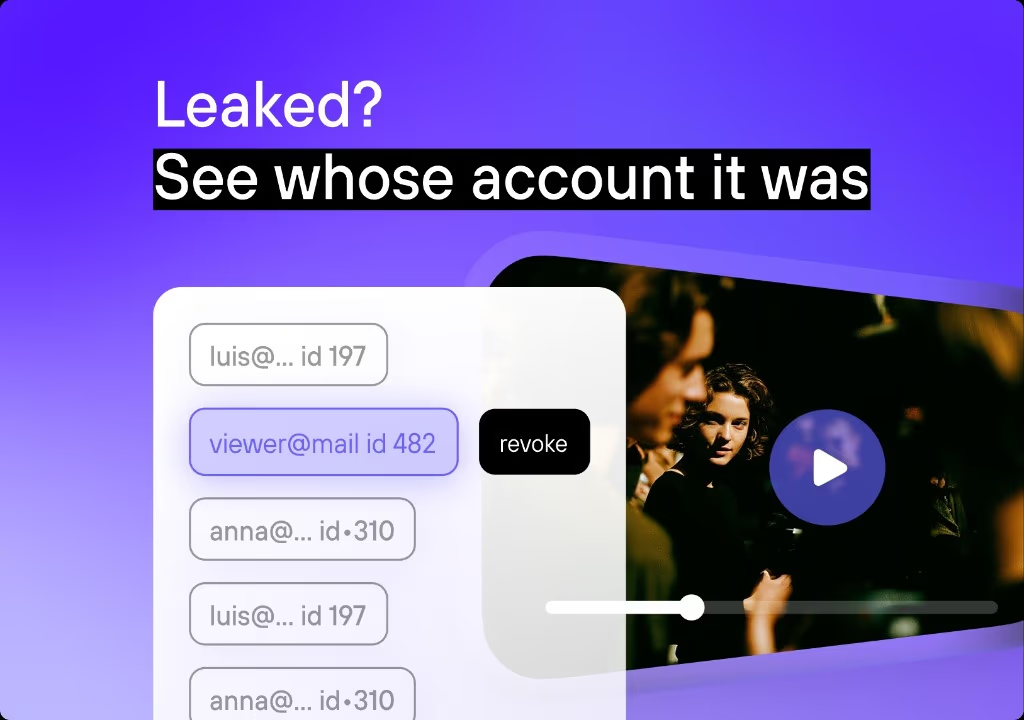

Put the viewer ID on each frame
Forensic watermarking embeds a per-viewer identifier inside the video signal, so a leaked copy can be decoded and traced to the exact account, session, or device it came from. It works after the fact, turning a leaked copy into evidence that points at one buyer, which is why studios and premium streaming services run it alongside DRM.
For a paid course, that changes how you respond to a leak. When lessons surface in a Telegram channel, recorded off someone’s screen, the useful question is which of your paying students recorded them, so you can revoke one account instead of locking everyone out. This guide covers how forensic watermarking answers that, how it holds up under re-encoding and camera capture, what it can’t do, and where it fits for courses.
Key takeaways
- Forensic watermarking doesn’t block a leak; it identifies the account behind a leaked copy, so it works after a screen recording defeats DRM.
- It’s standardized and studio-mandated: MovieLabs requires it for premium 4K, and the streaming industry standardized the A/B method through DASH-IF and ETSI.
- The invisible, studio-grade kind survives re-encoding, cropping, and camera capture, and is independently robustness-tested.
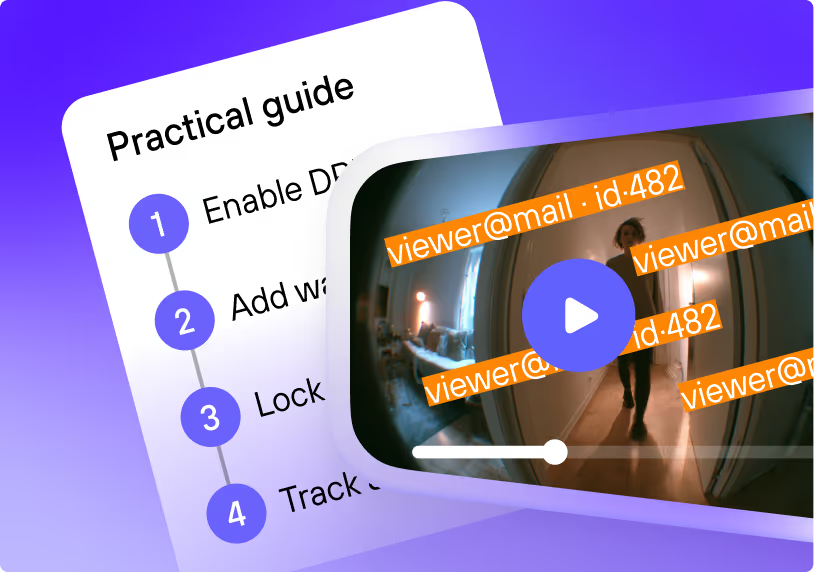
- Kinescope’s mark is a visible per-viewer overlay that moves across the frame: it names the leaker and can’t be cropped out, though it stays visible.
- It’s worth it when content is paid and a leak is a revenue event; for free marketing video there’s nothing to trace.
Visible watermark vs forensic watermark
A search for “video watermarking” returns two things that seem similar but solve different problems, and they’re worth telling apart before you pick one.
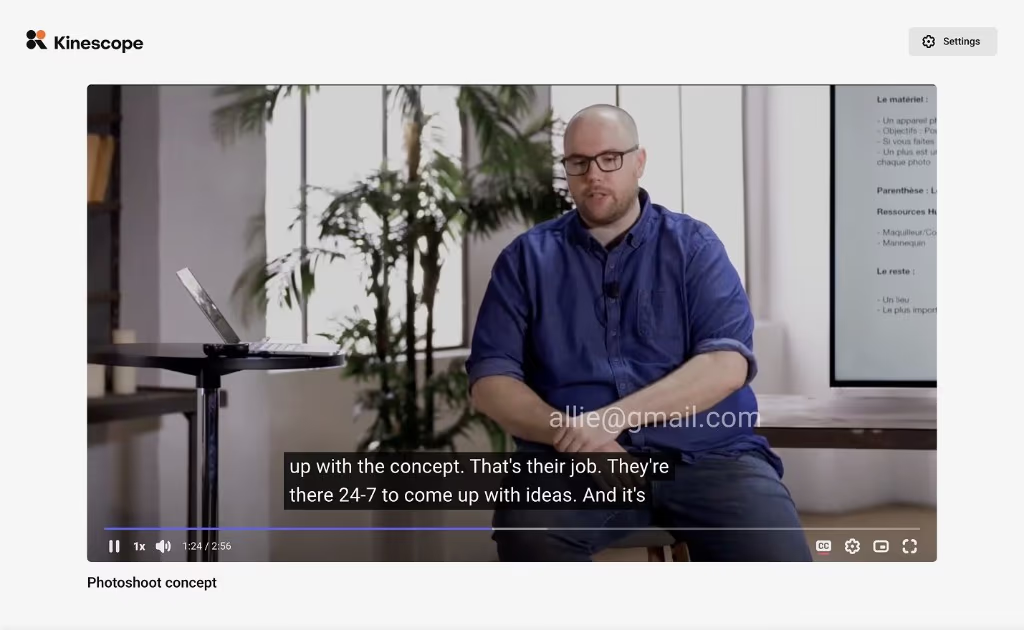
A visible watermark is an overlay: a logo, a username, or an email address on top of the picture. A dynamic version changes per viewer and shifts position across the frame, which makes it hard to crop out. Its job is deterrence: a viewer who sees their own name on the video is less likely to pass it around.
A forensic watermark is embedded in the video signal itself, through changes to pixel values or frequency-domain coefficients that stay below the threshold of human vision. A normal viewer sees nothing. The payload (a session ID, user ID, or device token) is invisible, and pulling it out takes extraction software plus your distribution records. Independent auditors and workflow tools draw the same line: a professional review platform like Frame.io, for instance, lists a visible on-screen “Watermark ID” and an invisible “Forensic” mode as two separate features.
Why DRM isn’t enough on its own
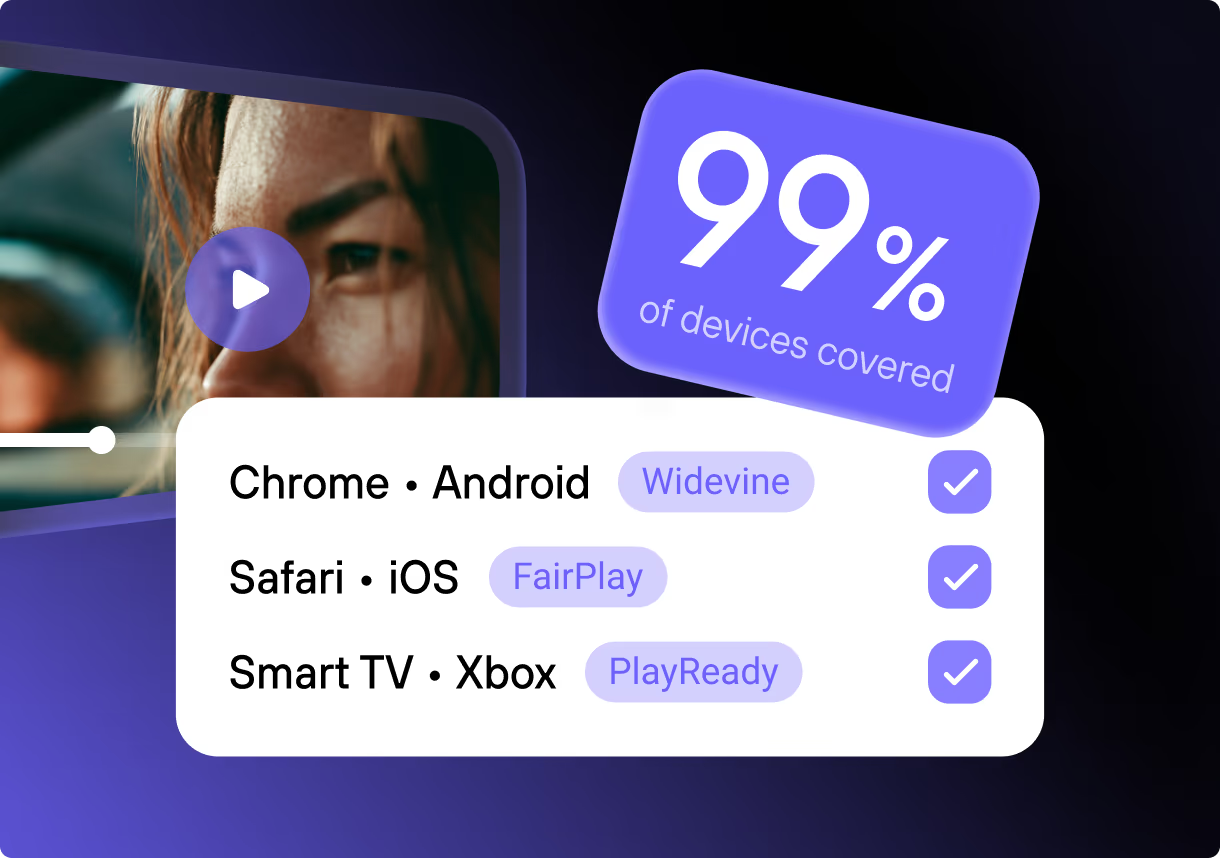
DRM encrypts the stream and, on hardware-backed devices, blocks screen recorders from capturing protected playback. That covers the download and the casual screen grab, which is most piracy. What it can’t touch is the analog hole: a second camera filming the screen. MovieLabs, the studio-backed body that sets premium content-protection requirements, puts it plainly in its Enhanced Content Protection spec: camcording ultimately can’t be prevented, but it can be addressed by forensic watermarking.
That’s the gap forensic watermarking fills. Even the largest streaming services, with content-protection budgets in the millions, still see titles leak this way. Digital video piracy costs the US economy at least $29.2 billion a year by the US Chamber of Commerce’s estimate, so the stakes are real.
Where DRM makes copying harder, forensic watermarking makes a copy that slips through traceable to the buyer behind it. For a paid course, that means a leaked copy points straight back to whoever shared it. This layered approach pairs naturally with multi-DRM on the prevention side.
What makes a forensic mark survive capture
A forensic mark is embedded in the picture itself, so it survives the things that would wipe out an overlay: recompression to another codec or bitrate, resizing, frame-rate and color changes, cropping, and a camera filming the screen. Studio standards set the bar here. MovieLabs ECP requires a forensic mark to survive collusion (mixing several copies to erase the ID) and any change that still leaves the content watchable, and to be tested for robustness by a third party.
Independent auditors such as Cartesian run compression, downscaling, cropping, and collusion attacks at rising intensity to find the point where the mark stops being readable.
How per-viewer marking works at scale
Doing this per viewer at scale uses a method called A/B watermarking. The service prepares two subtly different marked versions of each video segment, A and B, and gives every viewer a unique sequence of A and B segments; that sequence is the viewer’s ID, assembled at the CDN edge with no separate encode per user.
Each segment carries one bit, and because the identifier is a binary sequence, it takes only 24 segments to give ten million viewers a unique mark. The streaming industry standardized this approach through DASH-IF, published as an ETSI specification in 2023.
Static vs dynamic: tie the mark to the session
Where the identifier comes from decides how precisely you can trace a leak:
- A static watermark carries the same payload for everyone, so it identifies the content but says nothing about the viewer.
- A dynamic or session-based mark generates a unique payload per playback, tied to the account, session, or device. That’s the version that matters for attribution: it turns “our course leaked” into “enrollment #4471 leaked it.”
Dynamic marks come as a visible per-viewer overlay or an invisible embedded mark; both name the account, and they differ in how hard they are to remove.
The invisible kind has practical limits worth knowing. It needs enough footage to read: NAGRA’s studio-grade NexGuard ClipMark, built for short assets, recovers a mark from clips as short as 30 seconds, while a full multi-bit ID can take a few minutes of playback to extract, so very short clips are a weak spot. Reading the mark is an after-the-fact investigation, sometimes run through the vendor’s lab. Against the everyday course threat, a buyer who re-records and re-uploads a lesson, a robust mark survives the trip and stays readable.
What to do once you’ve found the source
Attribution only helps if you act on it. Once a leaked copy surfaces:
- Save the evidence, then extract the mark. Keep the leaked file exactly as found, since re-encoding it yourself degrades the mark, then run it through detection to pull the payload.
- Match it to your records. Look the ID up in your distribution database to name the exact enrollment or user.
- Cut off that account. Suspend the account and revoke its access, so the source stops producing new copies.
- File takedowns and keep watching. Send notices where the copy is hosted and monitor for re-uploads; the mark keeps every fresh copy from the same source traceable.
An extracted watermark plus access logs can also support a legal case, though for most creators the value is faster: it ends the leak at its source.
Where forensic watermarking fits for courses
Most writing on forensic watermarking targets film studios protecting pre-release screeners, where one leaked copy is a premiere ruined, and the named public case studies are almost all film, TV, and sport. For an info-product or a corporate training library the stakes are different but real: a course that took months to build, leaking in its launch week, to an audience that will never convert.
Forensic watermarking earns its place when your content is paid, individually accessed, and worth enough that a leak is a revenue event. It’s overkill for free marketing video, where there’s nothing to trace. In practice, edtech far more often uses a visible per-viewer overlay than invisible studio-grade embedding, because the visible mark already names the leaker at a fraction of the cost.
It works alongside prevention: DRM and access controls do the blocking, and the watermark names whatever gets through. For the wider setup, see how to stop video piracy.
How Kinescope handles per-viewer watermarking
Kinescope’s watermark is a dynamic, visible per-viewer mark: it stamps each playback with a viewer identifier (email or ID) that your backend supplies at playback, so once that integration is set, a leaked copy names the account it came from. It moves across the frame, so cropping can’t remove it, and it runs alongside encryption instead of replacing it. Because it’s applied per playback at delivery, it works inside an embedded player on any LMS or members area, with nothing for students to install.
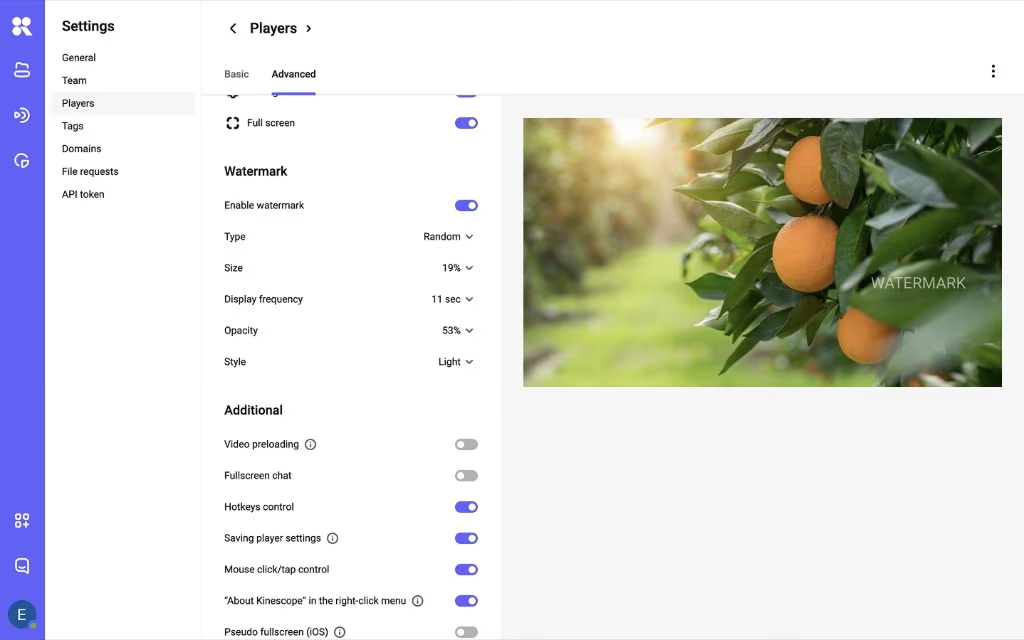
The honest boundary: the mark stays visible, so a determined attacker with editing tools could blur or mask it, whereas invisible studio-grade embedding (the NAGRA and ContentArmor class) leaves nothing on the surface to target.
The two are also far apart on price. A visible per-viewer mark is bundled into the hosting: on Kinescope it’s part of the plan from €10/month, no separate fee. Invisible studio-grade forensic is enterprise territory, sold on quote-based contracts far above a hosting plan, and reserved for high-value film.
For most course and training libraries the bundled visible mark is the right tool. See how DRM and watermarking fit together in Kinescope’s anti-piracy stack.