



















Wistia alternatives for business: real costs, DRM, and where to switch




Player analytics plus DRM
If you run video on Wistia, you already know the player is polished and the marketing analytics genuinely pull their weight. Teams start looking for a Wistia alternative in 2026 for two practical reasons: the bill climbs faster than the plan suggests once you add seats and automation, and there’s no built-in way to lock down a video you don’t want copied.
This guide compares eight Wistia alternatives on the two things a pricing table tends to hide: what protection you get, and what you really pay as you grow. You’ll get an honest glance-table, a plain-language read on DRM, and a by-owner way to pick.
Key takeaways
- The headline price understates the bill. Wistia Business is about €73/month on annual billing (€91 monthly) with three seats and 250 GB, and extra seats, bandwidth over the first terabyte, storage overage, and the ~€230/month Automation Suite all bill on top. Independent benchmarks put real business contracts well above the sticker.
- Wistia has no DRM. It locks the page with passwords and domain rules, so for content you charge for, the encryption has to come from somewhere else.
- The pricing model matters more than the sticker. Seat-based tools like Wistia and Vidyard get expensive as the team grows, while usage-based hosts like Kinescope and SproutVideo track what you store and stream. Match the model to how your costs move.
- Match the tool to the job. Among Wistia alternatives, Vidyard is sales video, Swarmify is raw speed, SproutVideo is secure hosting, and Gumlet is DRM on a small budget.
- Switching is low-risk. Moving off Wistia is a library export and an embed swap, and some hosts, Kinescope included, will run the whole migration for you from an access token, usually in under a week.
- Where the data lives is a decision. Kinescope is EU-governed out of the Netherlands, while Wistia, Vidyard, SproutVideo, and Swarmify are US companies.
Why teams look past Wistia in 2026
Wistia earns its keep for marketing teams, so the reasons to leave are specific. They tend to come down to three: a bill that grows faster than the plan suggests, a protection ceiling, and the point where marketing software is asked to do infrastructure work.
The sticker price and the real price are different numbers
Wistia rebuilt its plans on 17 March 2026, moving from per-video tiers to storage-based billing; the old Plus, Pro, and Advanced names are now Legacy. The current entry plan, Business, is about €73 a month billed annually, or €91 month-to-month, and includes 250 GB of storage, 1 TB of bandwidth, and three users.
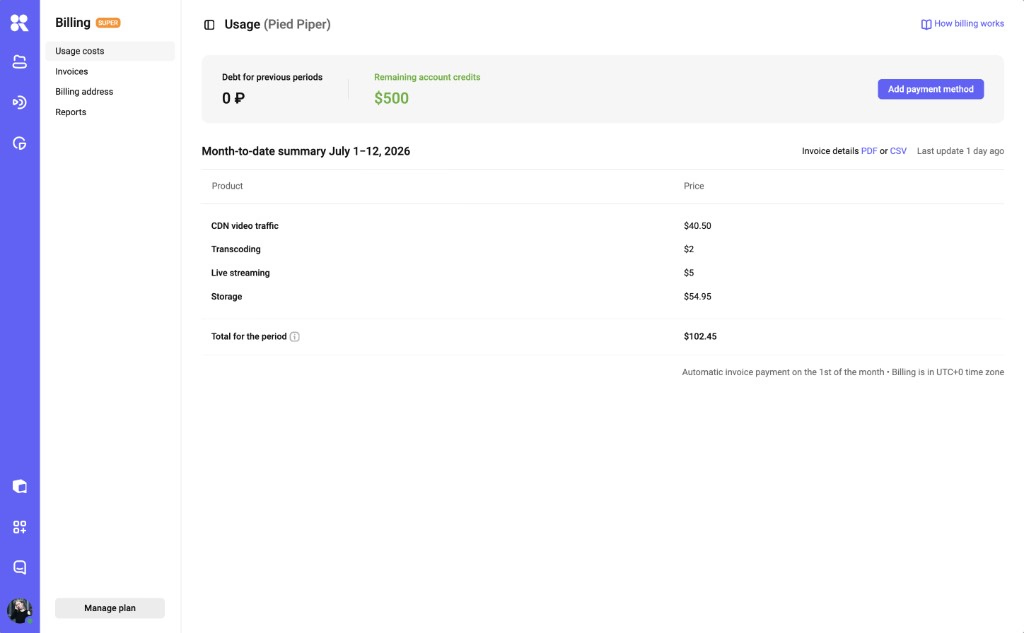
The bill grows from there, and bandwidth is the clearest example. Business includes 1 TB a month; once you pass it you add a bandwidth subscription, and Wistia’s billing screen prices 3 TB at about €110 a month and 5 TB at about €287, or roughly €0.13–0.17 per GB as overage.
Seats bill as usage once you pass the three included, and storage over 250 GB is charged the same way. The Automation Suite (the add-on that connects video to HubSpot, Marketo, or Pardot) is about €230 a month billed annually, and webinars and live events carry their own usage fees on top. None of those numbers show on the headline price.
Independent benchmarking fills the gap: Vendr, drawing on more than 100 Wistia deals, puts a typical business contract well above the sticker, with mid-market teams commonly around €90–460 a month and a median near €8,400 a year (Vendr, February 2026).
The pricing page, then, is a weak guide to the invoice, so cost is the first thing to model against any video hosting option you’re weighing.
Where Wistia’s protection stops
Wistia protects the page a video plays on, with passwords, domain restrictions, and email gates, but the video stream itself is never encrypted. Encrypting the stream is the job of DRM (digital rights management); the two systems that matter, Google’s Widevine and Apple’s FairPlay, release the decryption key only to an authorized device.
That closes the copy-and-repost path that page-level controls leave open. Page protection is plenty for a webinar or a marketing reel, but when the video is a paid course, a customer-only training, or anything confidential, the missing encryption is the gap that starts the search, and one reason secure video hosting buyers rule some platforms out early.
Marketing software, asked to do infrastructure work
Wistia is built for marketers, and it does that job well: heatmaps, in-video CTAs, lead capture, CRM attribution. The strain appears when the work turns into infrastructure — a large library, spiky traffic, or a product that has to pull video through an API.
A developer who wants SDKs and webhooks instead of a campaign dashboard hits that wall first. Wistia has an API, but it’s a marketing system at heart, and its bandwidth and storage ceilings become overage the moment a page takes off.
What to look for in a Wistia alternative
Before the options, four questions sort the field fast; they’re the ones that separate a real Wistia alternative from a lateral move. The right answer depends on who’s leaving Wistia and why.
A price that doesn’t punish a growing team
Two models dominate. Seat-based pricing, used by Wistia and Vidyard, is predictable while the team is small and climbs with every hire. Usage-based pricing, used by Kinescope and by SproutVideo’s overage or Swarmify’s view counts, tracks what you store and stream.
So a five-person team and a fifty-person team can pay the same if their viewing is the same. Neither model wins in the abstract; the mismatch is what hurts, so pick the one that fits how your cost moves. On Kinescope’s usage rates the tiers drop as volume climbs, which favors libraries that grow.
Protection that reaches the video itself
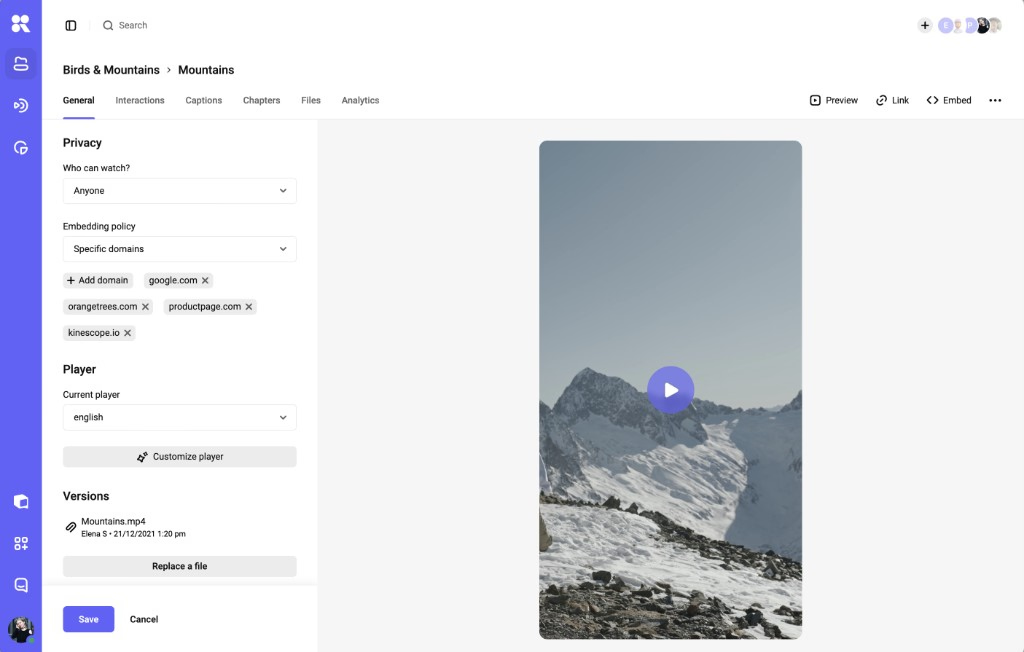
If you sell access to content, the deciding line is whether a platform encrypts the stream or only restricts the page. Kinescope and Gumlet apply Widevine and FairPlay DRM; SproutVideo, Spotlightr, Wistia, and Swarmify lean on access controls and, in some cases, their own encryption. That difference stays invisible until someone downloads and reposts something you meant to keep paid or private.
An API and SDKs if you’re building on top
A marketing team embeds a player and reads a dashboard. A product team needs to upload from its own backend, protect playback through its own login, and react to events, which calls for a real REST API, resumable uploads, webhooks, and SDKs.
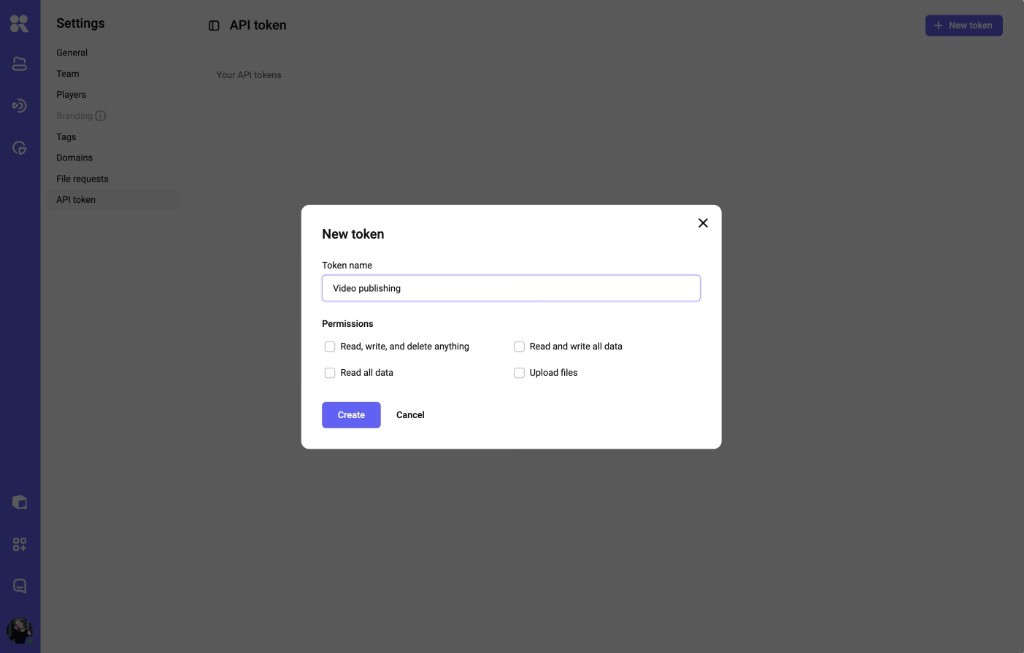
Mux and api.video are the developer-first reference points. Among the platforms here, Kinescope gives you the fullest developer surface (its API docs cover uploads, protection, and webhooks), while Wistia, Vidyard, and Swarmify keep the API secondary to the marketing product.
Where your data lives
For an EU buyer, the company’s jurisdiction can matter as much as the server location, because a US-owned provider can fall under US law even when files are stored in Europe. That is the practical edge of the GDPR question most comparison posts skip.
Kinescope is a Netherlands company with data in the EU, and Gumlet exposes region choices. Wistia, Vidyard, SproutVideo, and Swarmify are US-based. If GDPR posture is part of your procurement, that column is worth as much as the price.
The Wistia alternatives at a glance
Here’s how the eight Wistia alternatives compare on the criteria above. Prices are published starting points, read alongside each platform’s section, since a starting price rarely reflects a real bill. Read the DRM and “data in EU” columns first if you sell content or answer to EU procurement, and the price and API columns first if budget or a build is the constraint.
| Platform | Starting price | DRM (Widevine/FairPlay) | Watermark | Signed / expiring links | Domain & geo | Per-video analytics | REST API + SDKs | Webhooks | Data in EU |
|---|---|---|---|---|---|---|---|---|---|
| Wistia | ~€73/mo (annual) | No | No | No (password / domain) | Domain; geo Enterprise | Yes (marketing) | Limited | Limited | No (US) |
Kinescope Best fit |
from €10/mo + usage | Yes (included) | Dynamic | Yes | Yes | Watch-depth | Full + Tus, SDKs | Yes | Yes (EU / NL) |
| Vimeo | from €13/mo | Enterprise only | No | Partial | Domain all tiers; geo Enterprise | Paid tiers | Limited / Enterprise | Enterprise | No (US) |
| Vidyard | from ~€54/seat/mo | No | No | Password / tracking links | Limited | Yes (sales) | Limited / Enterprise | Limited | No (US) |
| SproutVideo | from ~€9/mo | No | Dynamic (higher tiers) | Yes (higher tiers) | Geo / IP (higher tiers) | Yes | Limited | Limited | No (US) |
| Spotlightr | from ~€12/mo | HLS encryption (not W/FP) | Yes | Tokenized access | Domain / geo | Yes | Yes | Limited | — |
| Swarmify | ~€17/mo | No | No | Token | Domain | Basic | Limited | No | No (US) |
| Gumlet | from ~€5.50/mo (+ ~€91 DRM) | Add-on (~€91/mo) | Dynamic | Yes | Yes | Yes | Yes | Yes | Regions vary |
Prices checked July 2026; USD plans converted at about €0.92 per USD, Kinescope prices natively in euros. Watermark and webhooks reflect vendor docs; features vary by tier — confirm on vendor pages before committing.
Prices checked July 2026; USD plans converted at about €0.92 per USD, Kinescope prices natively in euros. Watermark and webhooks reflect vendor docs; features vary by tier — confirm on vendor pages before committing.
Kinescope: DRM and API in the base plan, priced by usage
Kinescope is the option those Wistia-alternative lists tend to skip, and it answers the two gaps above head-on. Widevine and FairPlay DRM are on from the entry Super plan, so you can encrypt a paid video the day you sign up instead of waiting for an Enterprise contract to turn it on.

Pricing is usage-based on a €10-a-month floor. The floor covers your first slice of usage, then storage and delivery run from €0.03 per GB (dropping at volume) and transcoding is a one-time €0.01 per minute at upload. There’s no per-seat charge, so adding the sixth or the sixtieth teammate doesn’t move the bill; the pricing page has the volume tiers and a calculator to estimate a real monthly figure.
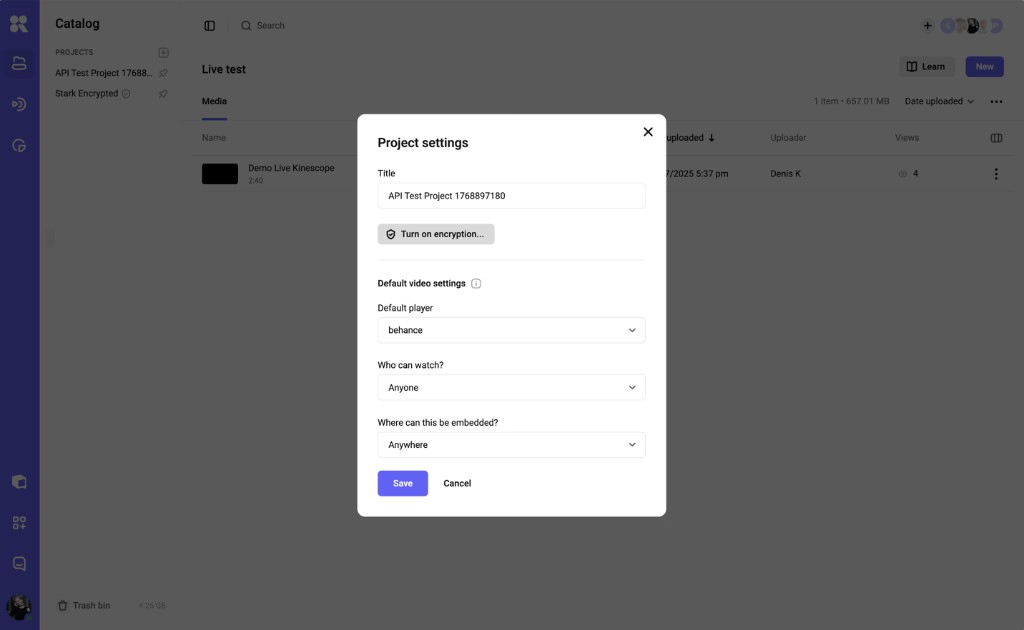
For developers, there’s a REST API, resumable uploads, webhooks, an authorization backend that routes playback through your own access rules, and SDKs for Swift, Kotlin, Flutter, React, and Vue. The player itself is clean, ad-free, and white-label.
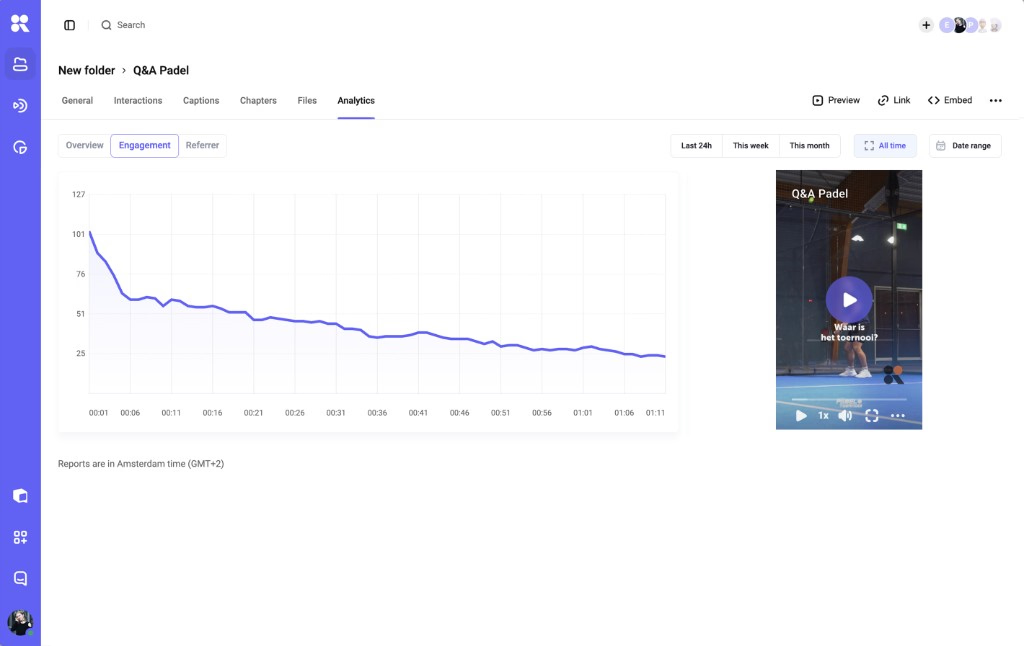
Analytics report watch-depth per video instead of campaign attribution, and the data stays in the EU. The honest trade-offs: the in-player call-to-action is a single button, well short of Wistia’s marketing suite, and the sales organization is smaller, without a 24/7 phone line.
If the reason you’re leaving Wistia is marketing automation, Wistia still does that better. If it’s protecting content and paying by usage, this is the Wistia alternative to shortlist, and the Kinescope vs Wistia breakdown goes deeper on the head-to-head.
Vimeo: the familiar move, with DRM behind Enterprise
Vimeo is the reflexive first stop among Wistia alternatives, and for good reason: a strong player, review tools, and a cheaper entry than Wistia, with tiers at €13, €31, and €115 a month before Enterprise. It suits creative showcases and client review well.
The catch for a business buyer mirrors Wistia’s. DRM, SSO, geo-blocking, and EU data residency all live on the Enterprise tier, so protecting a paid video means a custom annual contract instead of a toggle. Vimeo is also a US company, and its self-serve tiers cap bandwidth at 2 TB a month.
One caution before you commit: Vimeo’s pricing and plan structure have shifted a lot lately, so the tier you sign may not be the tier you renew — we tracked the details in our Vimeo alternatives guide. Our Kinescope vs Vimeo comparison covers the head-to-head.
Vidyard: built for sales video, priced by the seat
Vidyard solves a different problem than Wistia: personalized video for sales outreach, with recording, CRM sync, and viewer tracking that reps act on. Its analytics for one-to-one sends are genuinely strong.
The model is per-seat — a free tier, then Starter at about €54 per user a month and Teams near €91 per user — and the pieces a product team wants, single sign-on and deeper API access, sit on the top tiers. That makes Vidyard a fit when video prospecting is your motion, and an awkward one when you mainly need to host, protect, and embed a library. It’s a US company; here’s the Kinescope vs Vidyard view.
SproutVideo: secure hosting without the marketing suite
SproutVideo is the closest like-for-like among Wistia alternatives on private business hosting, and privacy is its calling card: login protection, geo and IP restriction, dynamic watermarks, and signed embeds on the higher tiers. Plans run from Seed at about €9 a month through Sprout (€32), Tree (€69), and Forest (€271), with bandwidth overage billed per GB once you pass a plan’s cap.
Two things to weigh. It applies access controls instead of certified Widevine or FairPlay DRM, so it’s protection short of studio-grade, and it’s a US company. For a team that wants secure, no-frills hosting and doesn’t sell encrypted content, it’s a sensible landing spot.
Spotlightr: made for course creators
Spotlightr, formerly vooPlayer, aims squarely at course creators and e-learning, with its own video encryption, watermarking, geo-blocking, and a hybrid setup that plays files from YouTube, Vimeo, or your own storage behind its player. Pricing runs from about €12 a month on the entry Light plan up to around €180 on Scale, with storage overage at €0.03 per GB.
It has an API and a customizable player, which puts it ahead of the marketing-only tools for a builder on a budget. Its encryption protects against casual copying, though it isn’t the certified Widevine and FairPlay stack a large paid catalog would specify. For the course use case specifically, our guide to video hosting for online courses weighs it against the field.
Swarmify: speed and unlimited bandwidth
Swarmify’s SmartVideo is the outlier that competes on one thing: raw playback speed, delivered from a 125-edge CDN with a clean, white-label player and no ads. Pricing is view-based and flat — €17 a month (annual) for 10,000 views, €54 for 50,000, €91 for 150,000 — and every plan includes unlimited bandwidth, so a viral post costs the same as a quiet one.
The trade-offs are scope. It’s on-demand only, there’s no DRM, and the developer API is limited. If a slow embed on a landing page is the actual problem, Swarmify fixes it more directly than a full platform would.
Gumlet: DRM without an enterprise contract
Gumlet is the budget route to real encryption. It offers full multi-DRM (Widevine and FairPlay) as a paid add-on around €91 a month on top of plans that start near €5.50, plus dynamic watermarking and SOC 2 and ISO 27001 certifications that formal procurement often asks for.
For a course or media business that needs certified, encrypted delivery without an enterprise negotiation, it’s a credible pick. You’re buying protection and infrastructure rather than a marketing layer, so a team leaving Wistia for the analytics won’t find those here.
When a Wistia alternative isn’t a host at all
Two names surface in Wistia-alternative searches that solve a different job, and it’s worth naming why they’re not swaps. Loom, now part of Atlassian, is async screen recording for quick video messages, priced per seat with a free tier — excellent for internal updates, though it isn’t a hosting-and-embedding platform for a marketing site.
Cinema8 builds interactive and 360° video with branching and clickable overlays on quote-based pricing, a specialist tool for interactive experiences rather than a general host. If one of those is the job you have, it beats any host on this list for that need.
How to choose, by who owns the decision
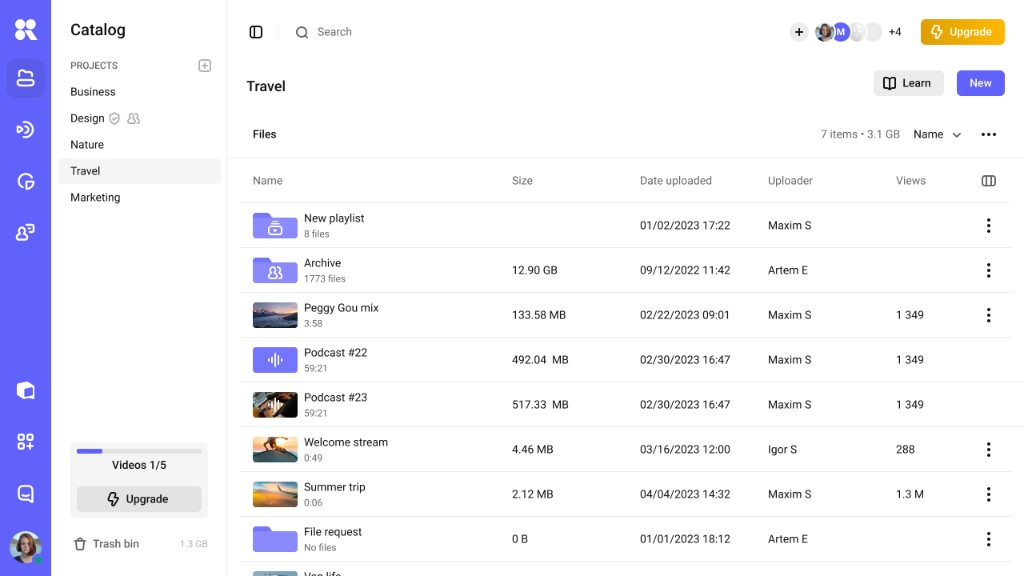
The cleanest way through the list is to ask who’s making the call, because each owner weighs the columns differently. No single Wistia alternative wins every column, so the owner’s priorities break the tie.
- If marketing owns it and the value is lead capture, CRM attribution, and campaign analytics, Wistia is hard to beat on its own terms, and Vidyard is the pick when the motion is one-to-one sales video.
- If a developer or product team owns it and video has to live inside an app, prioritize the API and SDKs — Kinescope among the platforms here, or Mux and api.video for a pure developer backend.
- If whoever sells the content owns it and the video is a paid course or premium library, the deciding axis is DRM plus data residency, which points to Kinescope (DRM in the base plan, EU data) or Gumlet (DRM as an add-on).
The switch is more routine than it looks
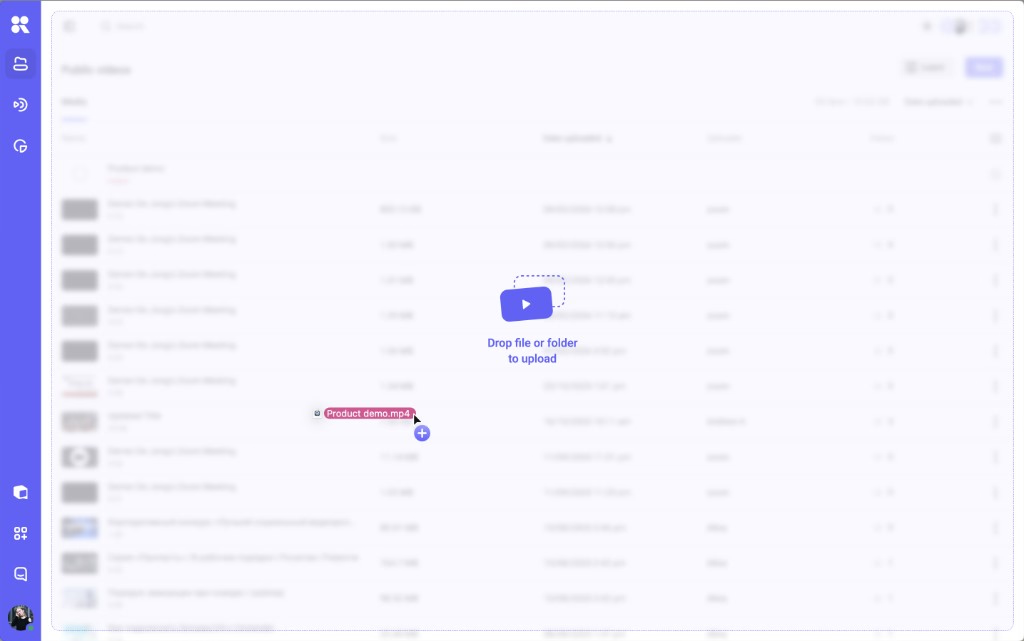
Most teams stay on a platform a year too long because moving a library feels heavier than it is. With Kinescope it usually isn’t: hand over an access token and the team runs the migration for you, typically in under a week. If you’d rather do it yourself, you can, with drag-and-drop, upload by link, or a pull from cloud storage (uploading by folder keeps your structure). Either route ends with a one-time embed-code swap on your pages.
If your reason for leaving Wistia is the real cost of a growing team and the missing protection on paid content, Kinescope is built for that case: Widevine and FairPlay DRM from the base plan, no per-seat fee, and a usage bill on a €10 floor, with your data in the EU.
Of the Wistia alternatives here, it’s the one that puts DRM, usage pricing, and EU data in a single base plan without an enterprise contract to unlock them. If you want to talk a move through, book a demo call and the team will map it out.