












How EBAC cut costs ~8× and retired its transcription pipeline




About EBAC
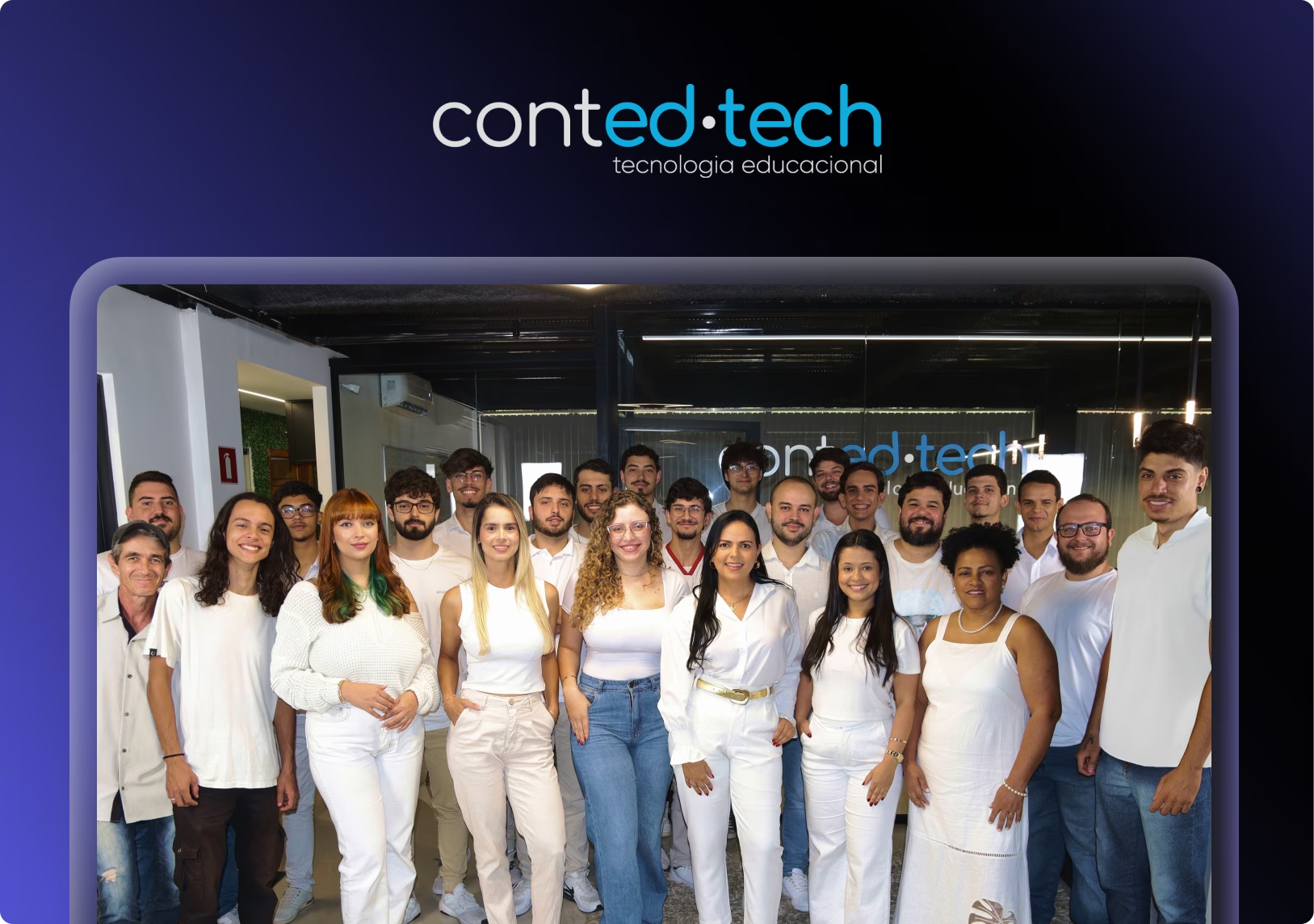
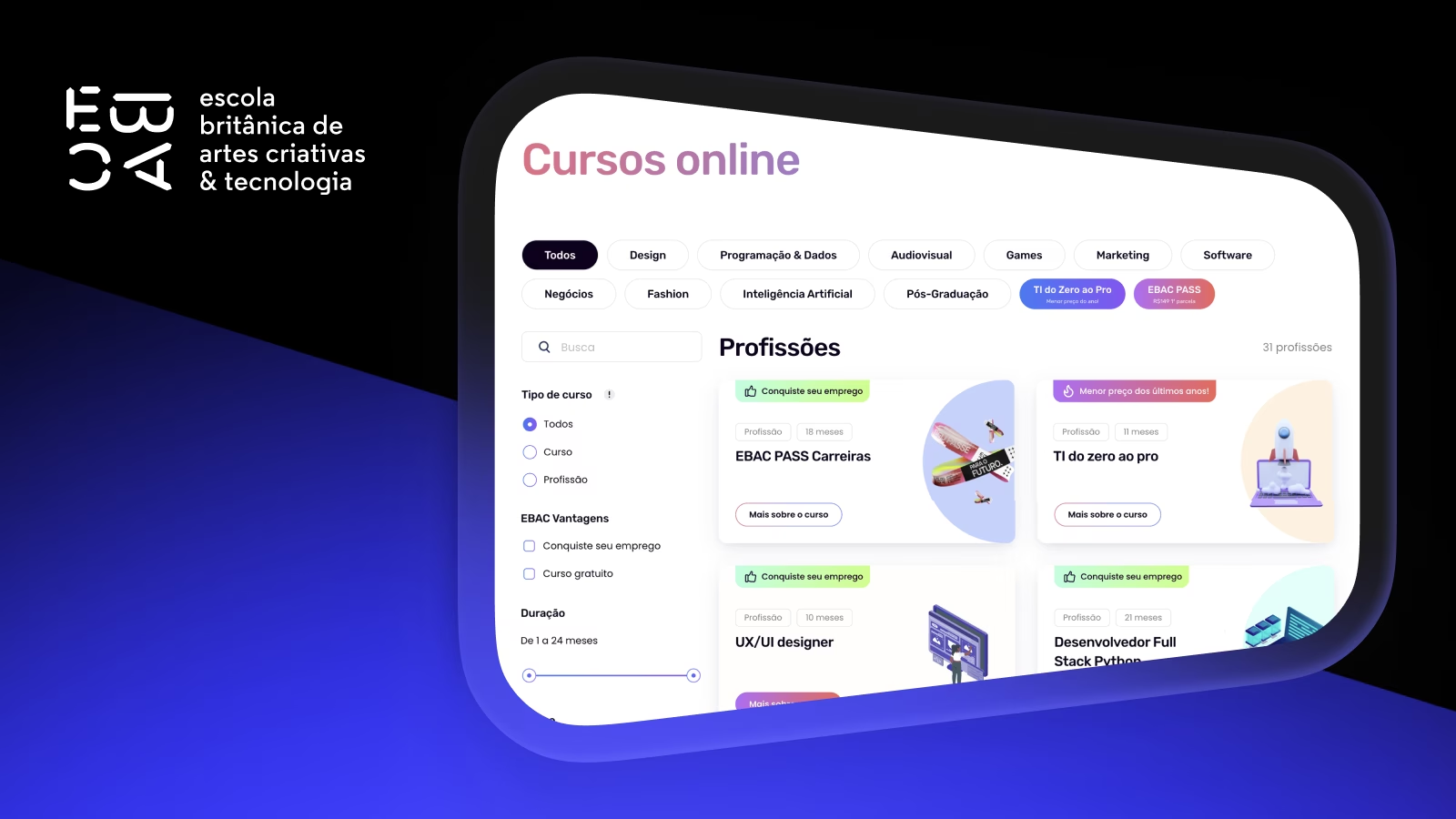
EBAC teaches digital professions online — design, programming, marketing, architecture — as a more affordable route to better-paid work for adults across Latin America. The team calls it upskilling and reskilling: a faster, affordable way to move up or switch fields without a full degree. Most students are in fact retraining for a field that’s new to them.
That mission now reaches 170,000 paid learners across Brazil and Mexico, with close to 190,000 in total, if the free introductory courses are counted. EBAC grew out of an offline design school founded in São Paulo in 2016, moved online as the pandemic made in-person teaching impossible, and expanded from Brazil into Mexico, with a small presence in Colombia and Peru, as demand grew.
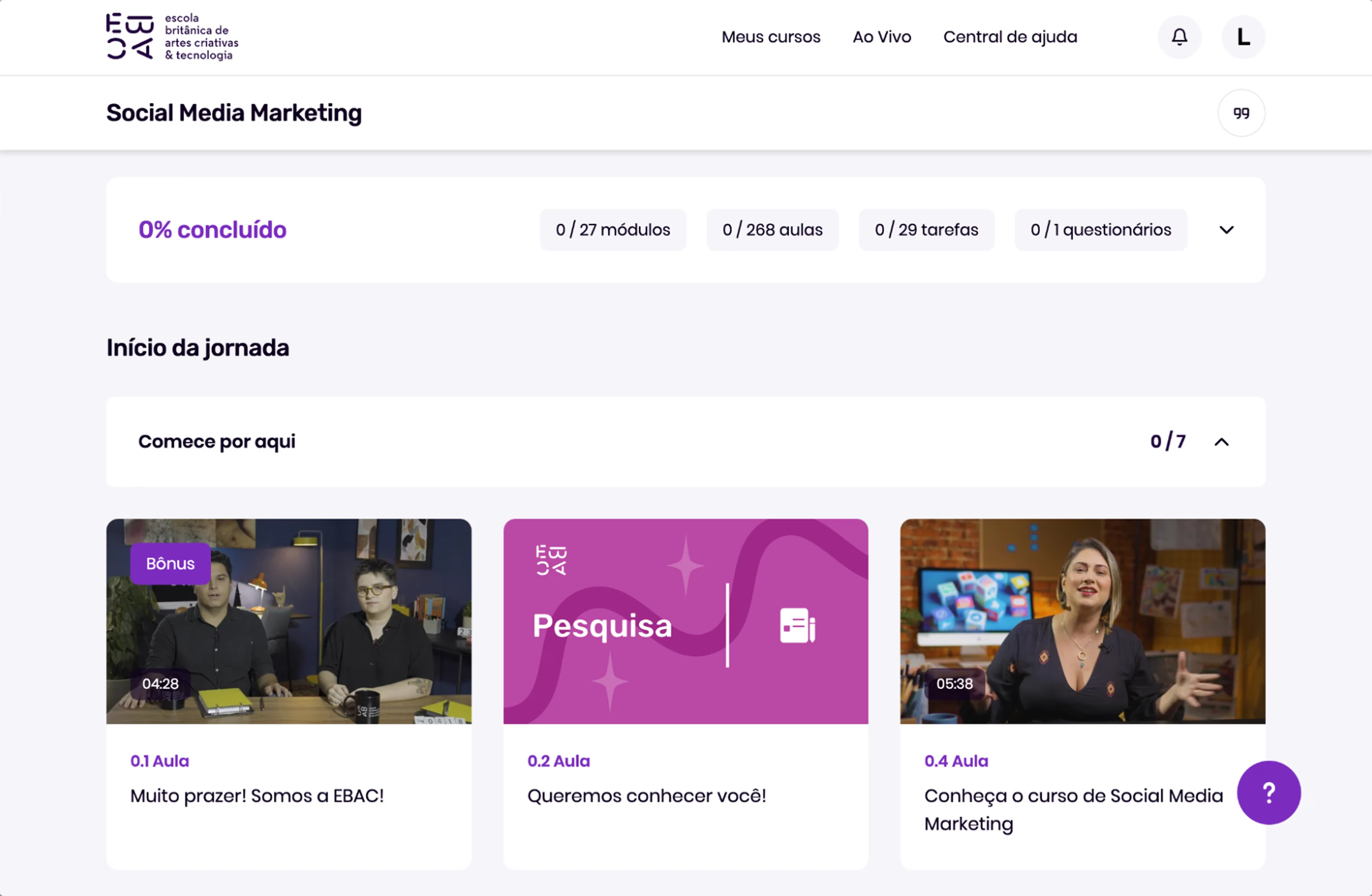
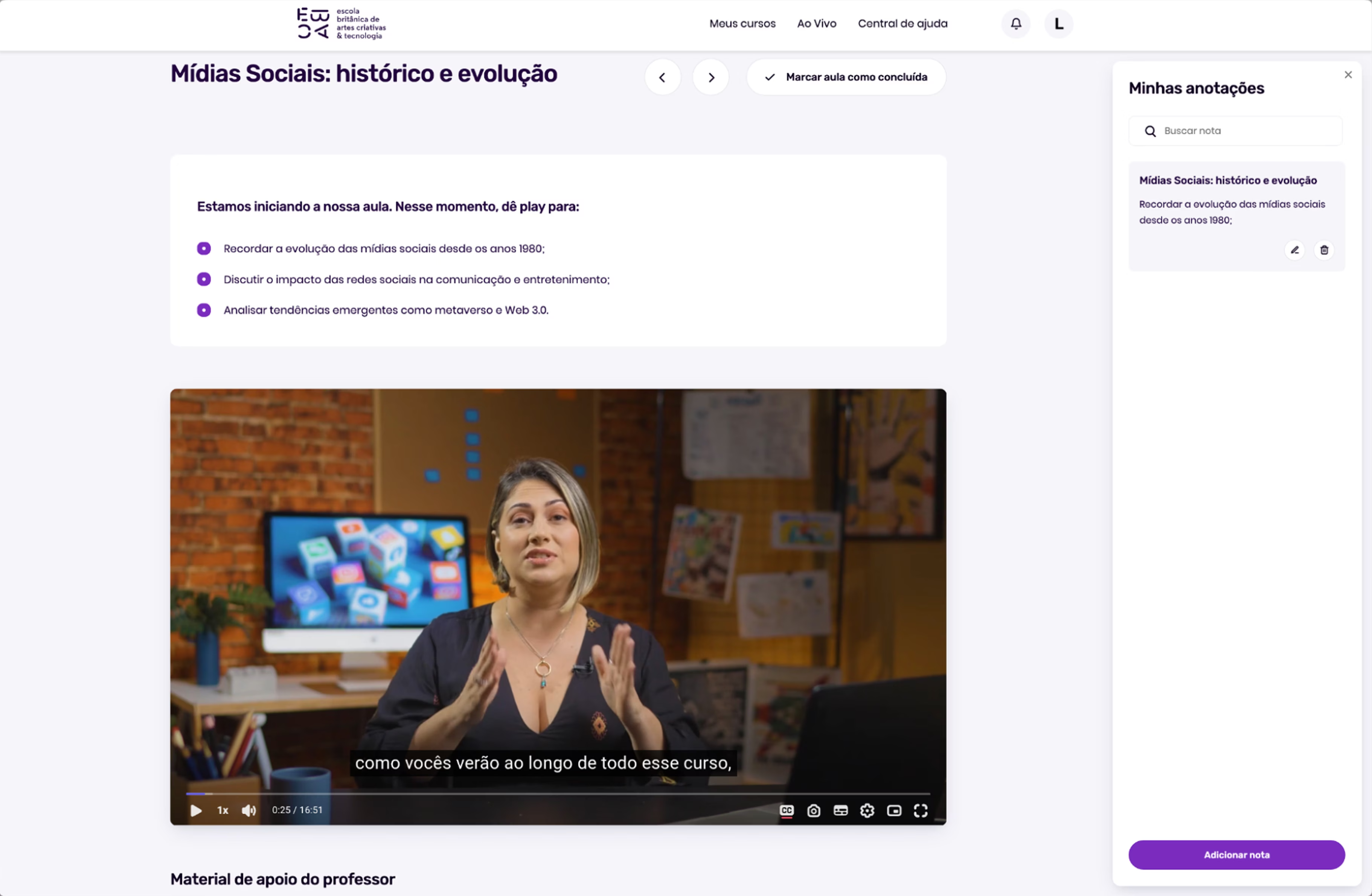
Video runs through every EBAC course. The team layers introductions, best-practice material, presentations, quizzes, and hands-on tasks on top of videos. The team calls this approach “learning through four senses”: you watch, you listen, you read, and you do.
Because the educators are professionals in their own fields rather than videographers, EBAC records everything in its own studio to keep the picture and sound at a consistent standard.
Much of the platform side runs through Denis Korovkin, EBAC’s LMS team lead, who joined in 2021 to build the learning platform and handled the move to Kinescope himself. The migration was his to run, so we asked him to tell the story.
The market that made cost the deciding factor
EBAC launched into open ground: Brazil was Latin America’s largest economy and drew the majority of the region’s edtech investment (L.E.K., 2023), demand for digital skills far outran supply (Brasscom, 2021), and quality online education was either scarce or expensive. Growth in the early years was steep, enough to raise several rounds of investment.
Then the market tightened: venture funding for edtech fell almost 90% from its 2021 peak (HolonIQ, 2025), and with Brazil’s benchmark interest rate, the Selic, held at a cycle-high 13.75% through 2022–23 (Banco Central do Brasil), the student loans that fund many enrollments became far more expensive to repay. Weaker players fell away and the survivors turned to discipline. For a platform whose largest recurring line item is video, that meant looking hard at what the video cost.
The challenge: a video bill that scaled the wrong way
For years EBAC had hosted its catalogue on Kaltura, a video platform long used in education. Kaltura was dependable: it went down only when the cloud service, AWS, itself did, and the content needed to be available around the clock.
The main problem was the shape of the bill. As the library grew, add-ons for storage volume and traffic stacked on top of the base contract, and the monthly total kept climbing. EBAC hosts 26 TB of video today and adds roughly 1 TB every month; with Kaltura, that growth translated directly into a rising bill for capabilities the team never used. With the contract up for renewal in the middle of a company-wide push to cut costs, the timing decided itself.
There was a second, quieter gap: subtitles. Every EBAC video carries them, and because some students are hard of hearing, accessibility is a strict requirement. Kaltura’s auto-captions ran at roughly 80% accuracy, about YouTube’s level — readable, but too rough to leave unedited. When a course needed clean captions, editors had to redo them by hand and re-upload.
Why Kinescope
When Kinescope reached out through a sales conversation, it offered full trial access, including the API. It was enough for Denis’s team to set up a test configuration and move real students across in stages rather than betting the platform on a single switch. When they compared it properly, a few things lined up:
- Usage-based pricing. EBAC would pay for actual use rather than for tiers of headroom it didn’t need.
- DRM included. Content protection came as part of the platform, while Kaltura had charged separately for it.
- A developer-friendly API. The documentation was in order, which suited a team that runs everything through code.
- A human on the other end. Less a spec than a feeling.
Kaltura is a big corporate machine. Here [at Kinescope] it’s real people — a Telegram chat we can turn to if something isn’t working.
The team looked at the alternatives honestly too: self-hosting on AWS came out expensive, and Panda Video quoted traffic costs higher than Kaltura’s. The call was made inside the development team and signed off upstairs on a simple argument: it would save roughly eight times over.
A fast migration, and a player tuned to fit
Most of the effort went into wiring rather than the move itself. Over about two months, the team re-pointed its admin tools and scripts at the Kinescope API and wrote a migration script that carried the whole 16 TB library across in a couple of weeks. Students followed gradually, in test batches first and then at full volume. For them the switch has still been almost invisible, and the platform has stayed stable throughout.
We just decided we wouldn’t renew the Kaltura contract, switched all the traffic over to Kinescope, and off we went.
In day-to-day use, the pipeline is scripted end to end: a finished video lands in a Google Drive folder, gets pulled into Kinescope automatically, and appears on the platform ready to use. Nobody on the content team logs into Kinescope directly; the automation covers that step, so there are no manager accounts at all.
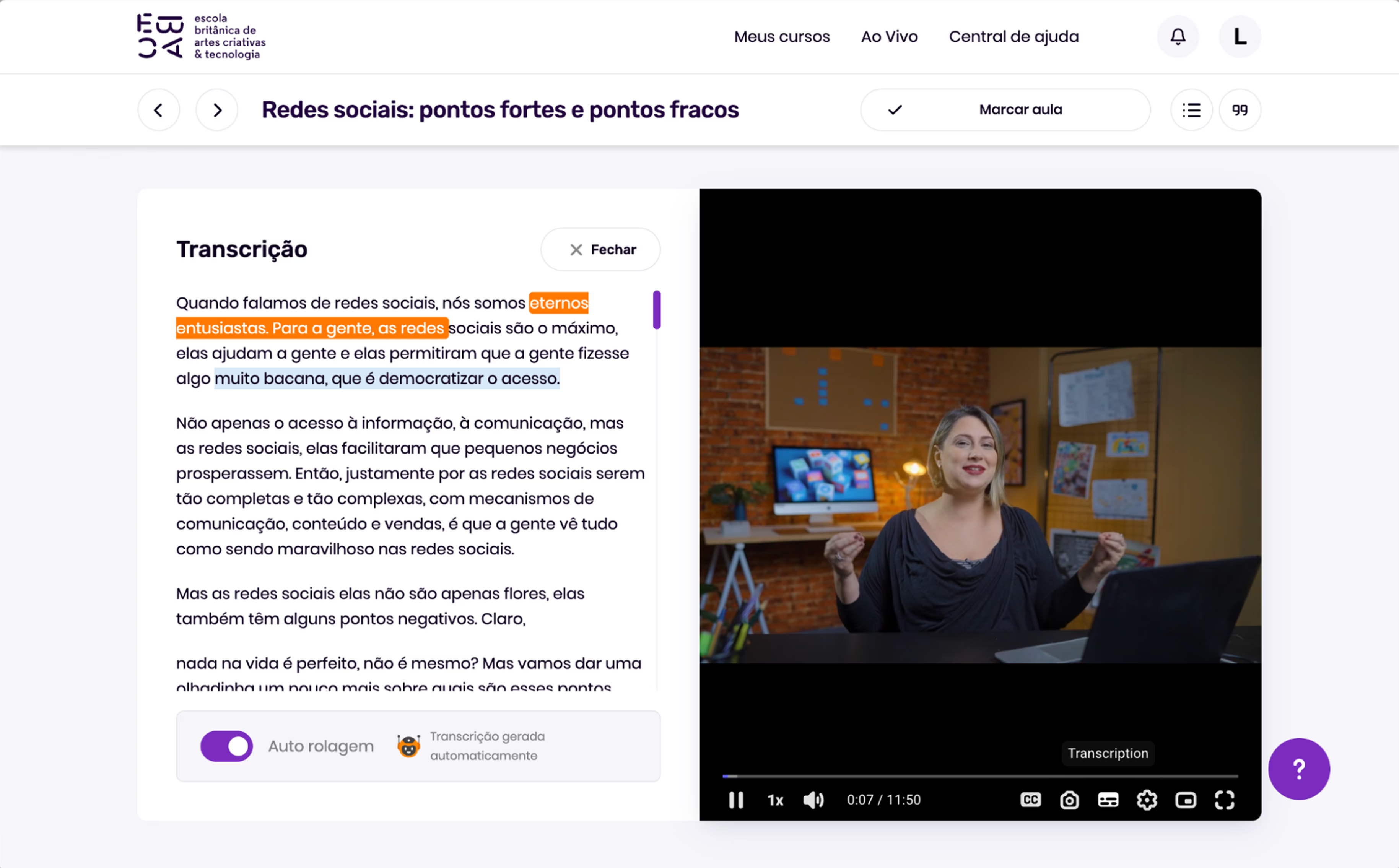
One piece still had to be fitted by hand: the player. EBAC needed a button Kinescope’s player didn’t support yet: a toggle for a side-by-side transcript that scrolls alongside the video, highlighting each word as it’s spoken. So Kinescope opened up the player API specifically for EBAC, letting the team wire custom buttons of its own into the player.
The results: lower costs, cleaner AI, and a network catching up
Before the numbers, Denis is clear about the one thing Kinescope gets right.
The main thing is that the content runs fast, well, without lag, and reliably. Everything else is secondary.
By the end of its Kaltura contract, EBAC was paying a four-figure monthly bill to host its video. Kinescope’s usage-based pricing, on the same volumes, comes in roughly 8× lower.
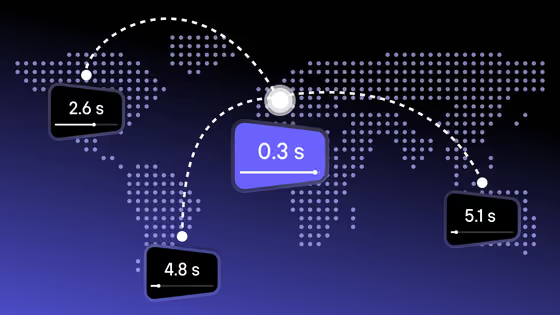
For now EBAC isn’t paying even that. Kinescope’s network doesn’t fully cover EBAC’s reach inside Brazil; a few hundred students on certain networks can’t always load a video. The team bridges the gap with an S3 backup that serves the file from its own storage when the primary source stalls, while Kinescope builds out capacity aimed squarely at EBAC’s footprint. Until that’s done, the school isn’t billed.
If the savings were the expected win, the subtitles were the surprise: Kinescope’s came out accurate enough to use untouched, and that let EBAC scrap a whole in-house pipeline.
To produce its transcripts and feed its AI, the team used to pull each video’s audio, run it through its own speech-recognition to rebuild the captions, then derive a transcript from that. Once Kinescope’s subtitles arrived clean out of the box, the whole recognition step came out.
The subtitles come out at a really good level right away, you don’t even need to correct them. We threw our own pipeline out. Who would’ve thought?
Everything downstream now runs straight off those subtitles: EBAC’s transcripts, its AI summaries, and an assistant that answers students’ questions. Because the subtitles are timecoded, the assistant knows which moment of a lesson a student is on.
What’s next
EBAC keeps deepening the AI layer built on subtitles — the summaries and the course assistant that reference each lesson through its transcript. The team is also experimenting with translated courses: taking a course recorded in Spanish for Mexico and re-voicing it into Portuguese in the same instructor’s voice, with one such course already live. Wherever that goes, video stays at the center of how EBAC teaches.
Ask Denis to sum the whole thing up, and it comes out almost as a strapline:
A good, convenient API. A human, friendly attitude. Stable performance. Nice prices.
Tell us how you deliver video. We’ll fit around it.
Kinescope handles hosting, delivery, DRM, and subtitles, and adapts to how you already work with usage-based pricing that follows real volume. Tell us your setup and your numbers, and we’ll price it to match.
FAQ
Read more