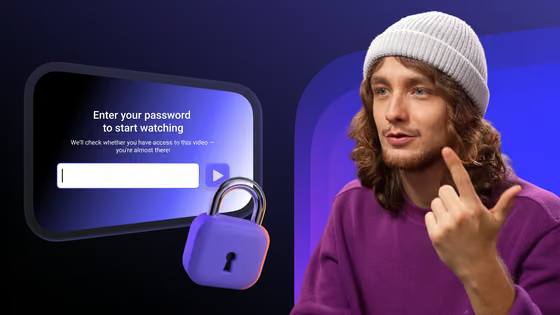






















Plays only on your domains
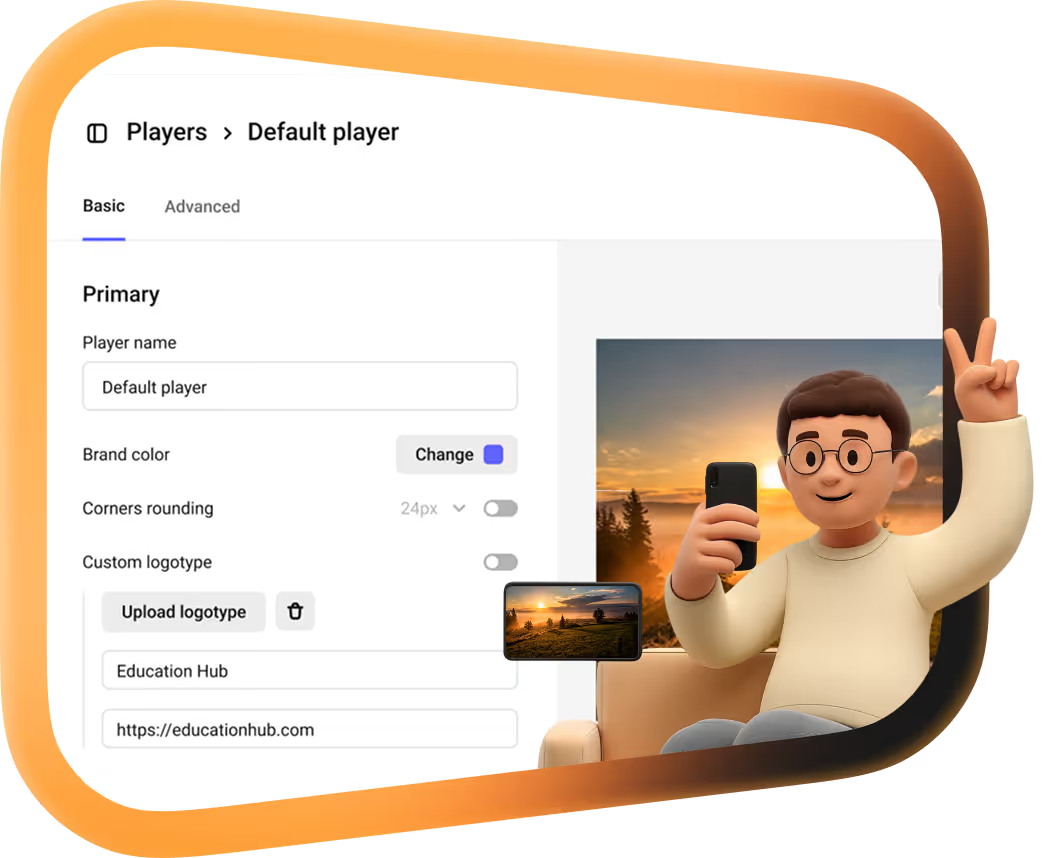
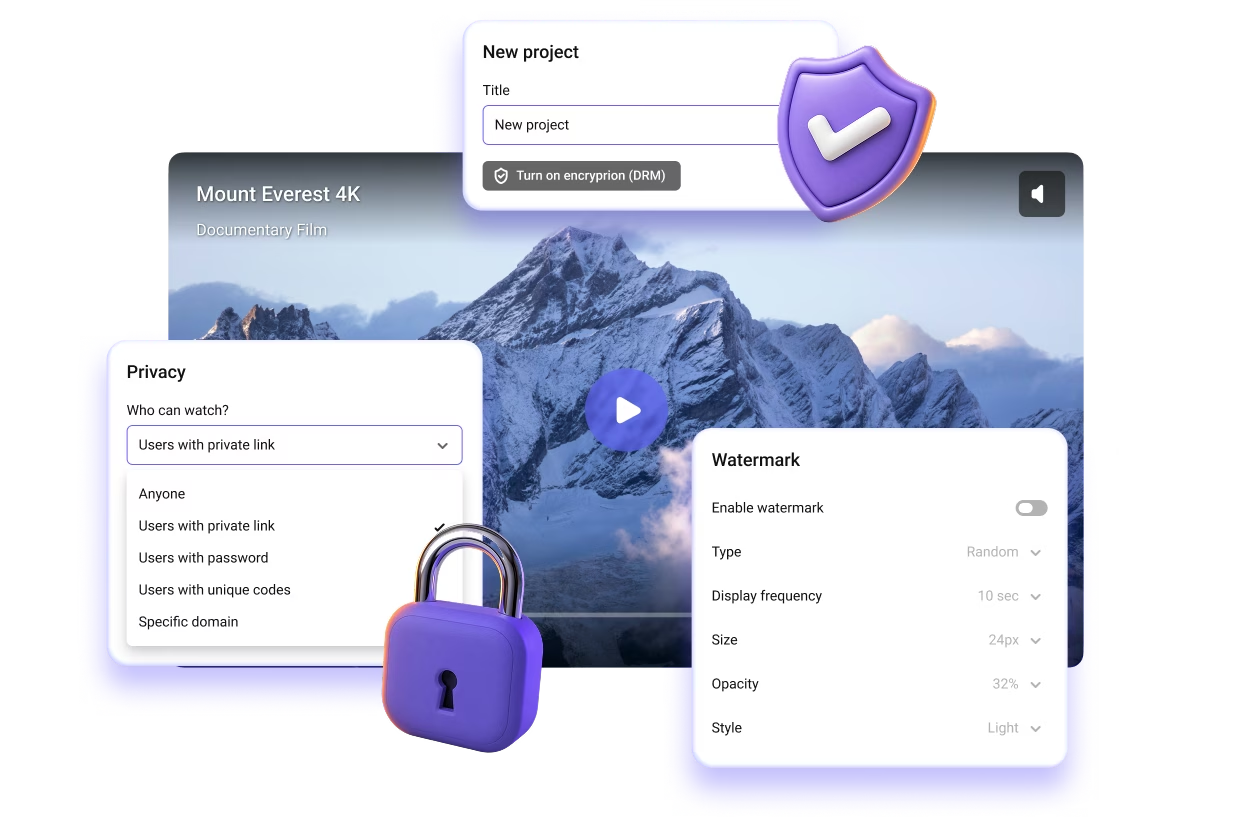
Domain allowlisting, included on all paid plans, makes the player load only on the domains you approve. A copied embed shows a blocked player anywhere else.
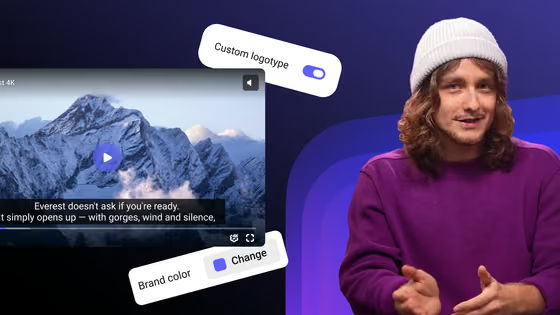
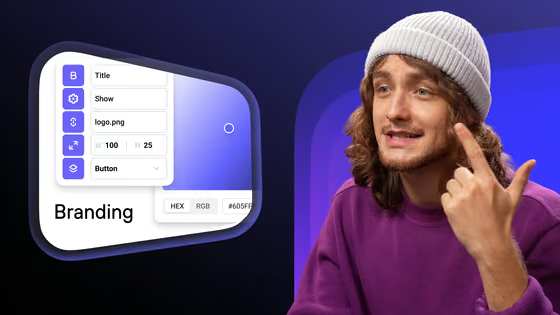
 PlayerAd-free, 4K, yours to brand
 An embeddable video player: ad-free, 4K, yours to brand
Fast, customizable and ad-free video player for websites, CMS and platforms.
 Video hostingFor content you can’t afford to lose
 Secure video hosting for content you can’t afford to lose
Secure video storage, processing and global delivery with high performance.
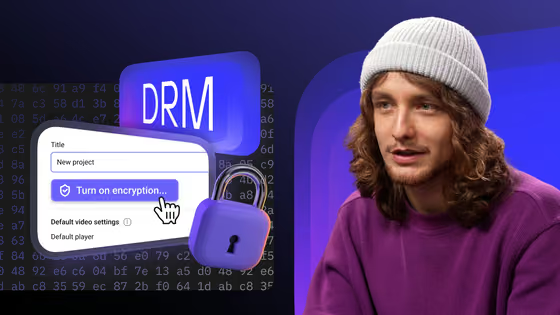
 DRMWidevine and FairPlay on paid plans
 Multi-DRM video hosting: Widevine and FairPlay on every paid plan
Encryption, with watermarks and access rules that turn it into a full protection stack.
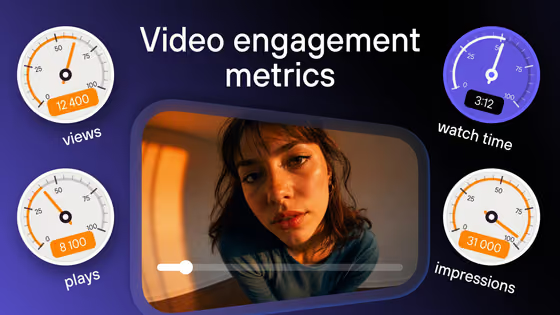
 AnalyticsTurns views into insights
 Video analytics that turns views into insights
Real-time video analytics: views, retention, engagement and audience behavior.
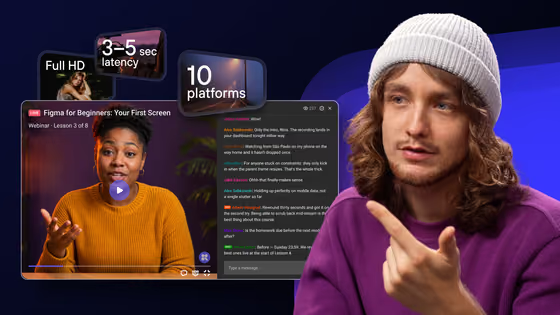
 StreamingLive and on demand, at any scale
 Low latency streaming for enterprise: live and on demand, at any scale
Stable low-latency live streaming for events, webinars and product launches.
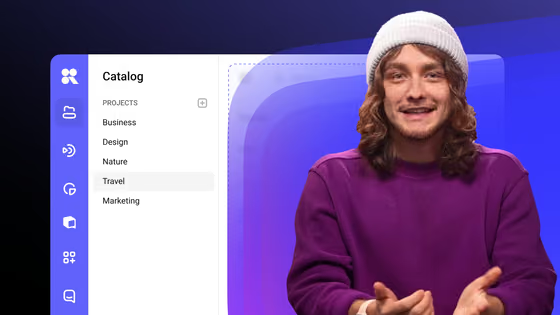
 ManagerVideo CMS built for teams
 Video content management system built for teams
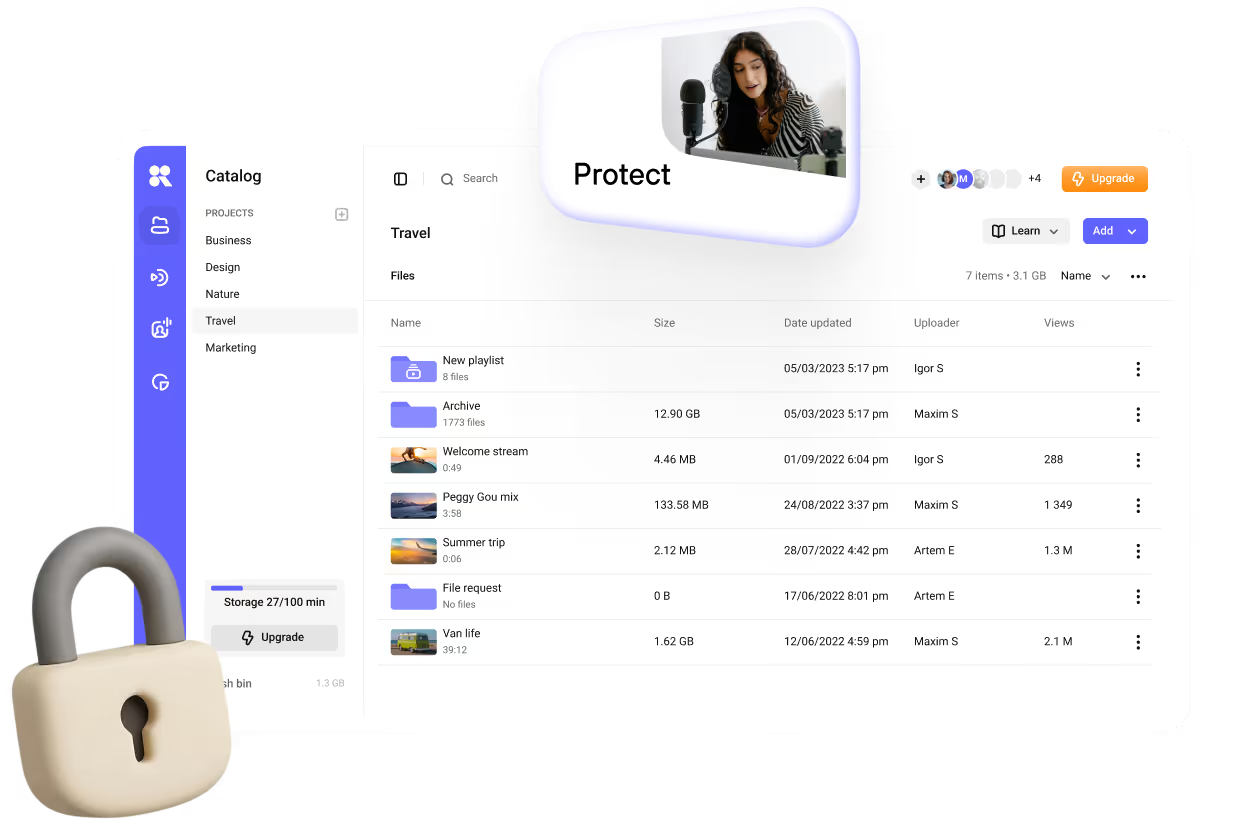
Central dashboard for upload, organization, access control and permissions.
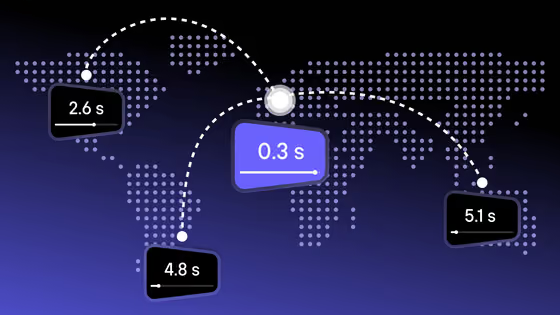
 CDNFast delivery worldwide
 Video CDN, built in: fast delivery for your video, worldwide
Global infrastructure for reliable storage and fast playback — at the cost of rented servers.
 Video API Developer hub, MCP server and 8 SDKs
 Video infrastructure for the agentic era
One video streaming API for resumable upload, parallel transcoding, Widevine and FairPlay DRM, live streaming, CDN delivery and analytics.
curl -X POST https://uploader.kinescope.io/v2/video \
  -H "Authorization: Bearer $KINESCOPE_API_TOKEN" \
  -H "X-Parent-ID: $PARENT_ID" \
  -H "X-Video-Title: Lesson 1" \
-H "X-Video-URL: https://example.com/lesson-1.mp4" API reference REST API with one Bearer token
 API reference
Send REST requests with JSON to api.kinescope.io/v1, passing your API token as a Bearer header.
 Player docs Iframe, IFrame API and playlists
 Player docs
Paste the iframe, or drive the player from JavaScript with the IFrame Player API.
<iframe src="https://kinescope.io/embed/VIDEO_ID"
  allow="autoplay; fullscreen; picture-in-picture; encrypted-media;"
  frameborder="0" allowfullscreen
width="560" height="315"></iframe> SDKs 8 open-source player SDKs
 Eight open-source SDKs for the same player
 Integrations WordPress, Moodle, Zoom and more
 Integrations
 MCP server For AI agents, in public beta
 Connect your AI agent to Kinescope
Kinescope MCP Server, now in public beta, lets Cursor, Claude Desktop, Claude Code and other MCP clients work with your workspace in plain language. It uses your API token and your account’s access rights, and delete operations are turned off.
"Kinescope MCP": {
  "type": "streamable-http",
  "url": "https://api.kinescope.io/mcp",
  "headers": {
    "Authorization": "Bearer …"
  }
} BlogGuides and product updates Video BlogShort tutorials and tours
  Customer storiesHow six teams switched
  Mathijs de RuiterJoJoschool
 Whole catalogue · within a week ~8×lower projected video costs …a human touch, stable performance, and fair prices
  Denis KorovkinEBAC
  16 TB · a couple of weeks ~60%lower video costs Kinescope’s affordable, scalable, and accessible video solution has been a game-changer…
  Eriky KunitakeAda
  Around 700 hours · under two months
  Glossary25 terms in plain English
  Knowledge base Guides, API and player docs Getting startedMigrating from other platformsContent protectionPlayer setup and embeddingLive streamsAPI reference
 Search the docs or ask AI right inside the help center.

Kinescope is a Dutch company, and your video data is stored in EU data centres on every plan. Viewer data is collected only if you choose, videos play only where you allow, and security documents are available on request. From €10/month.


Switch between storage, delivery and viewer data to see what stays in the EU and what you decide.
We embedded our own demo video on a third-party page, pressed play and recorded everything the player did: every request, every cookie, everything it stored.
kinescope.io Embed page, video playlists (HLS) and subtitles 7 player.kinescope.io Player scripts 8 static.kinescopecdn.net Player fonts, served by Kinescope 2 edge-ams-1.kinescopecdn.net Poster, video and audio segments from the CDN edge 14 player-metrics.kinescope.io Batched playback metrics 2 Set-Cookie header, and document.cookie inside the player was empty. TextTrackLang_global Last subtitle language AudioTrack_global Last audio track CurrentTime_<video> Where playback stopped, to resume ClientId A random client ID (UUID) Kept in the player’s own local storage on kinescope.io, not on your site.
Our test, 29 September 2026: the demo video embedded on a third-party page in a fresh Chrome profile, played for about ten seconds, player version 2.196.5. Results can change with player updates.
Limit where videos play, who can open them and who on your team can change anything.
Domain allowlisting, included on all paid plans, makes the player load only on the domains you approve. A copied embed shows a blocked player anywhere else.
When someone presses play, Kinescope passes their identifier to your server and your rules decide whether the video loads, so the access decision stays in the system you already run. More on private video hosting.
Your team signs in through your corporate identity provider with single sign-on, and role-based access and audit logs record who changed what. All three are on the Mega plan.
Pick a rule and see what happens in three everyday situations.
Access rule
They have the link.
They enter the password shared with the team.
The code opens the video for them.
Your server recognises the signed-in employee.
Your intranet or LMS is on the allowlist.
Anyone with the link can watch, so forwarding shares access.
A password can travel with the link.
Each code works one time.
They are not signed in, so your server says no.
Outside your domains the player shows as blocked.
Nothing ties the video to your site.
Anyone who knows it can watch there.
The player asks for a code first.
That site’s visitors are not signed in to your system.
Other sites are not on the allowlist.
Rules stack: for confidential sessions add Widevine and FairPlay DRM and a watermark with the viewer’s ID. Domain allowlisting is on all paid plans.
What your data protection officer and procurement usually ask for, in one place.
Access, correction, deletion and portability work the way the regulation requires. Requests go to the contact details in the privacy policy.
SOC 2 documentation and a security questionnaire response are available on request. The privacy policy and the SLA are public.
Widevine and FairPlay DRM on every paid plan, and a dynamic watermark with the viewer’s ID in every frame. Downloaders get nothing, and screen recording is blocked at the OS level wherever the system allows it.
Tick the questions your vendor questionnaire asks and copy the answers in one click. Every answer comes from our public pages and privacy policy.
JoJoschool prepares 80,000+ students for exams with material tied to the textbooks Dutch schools use. Keeping student data in Europe rather than the United States mattered for privacy and for the schools it sells to — one of the reasons it moved from Vimeo to Kinescope.
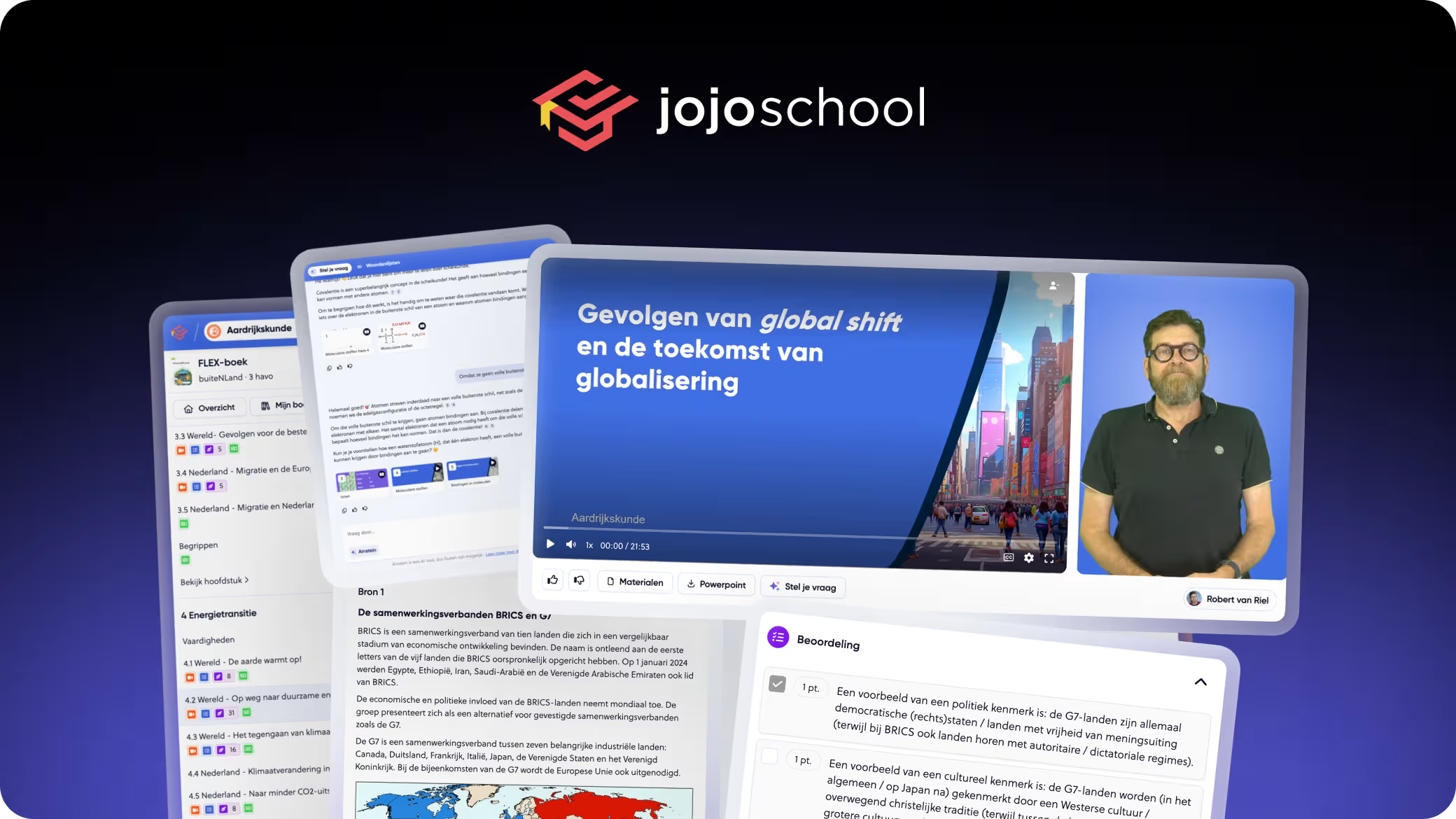
~10× lower video costs
Exam prep tied to the textbooks Dutch schools use, for 80,000+ students
Vimeo Bring the library to EU storage with the same player, access rules and analytics for every video.
Moving a library is on us — free on the Super and Mega plans. We pull everything across, metadata preserved, usually within a week.
Can’t find the answer you need? Check out our Help Center.
Try everything Kinescope has to offer. No card required.