



















OTT (over-the-top)
Video that reaches viewers straight over the internet, without cable, satellite or IPTV. The model of Netflix, DAZN and any company’s own video platform.
OTT (over-the-top) is video delivered directly over the internet to any device, without depending on an operator. An OTT platform brings together hosting, CDN delivery, a player, DRM and access control.
What is OTT?
OTT stands for “over-the-top”: the video travels over the internet connection the viewer already has, without going through a TV operator’s network. It does not matter whether the viewer is at home on fibre, on mobile data or in a hotel: a connection and a browser, an app or a smart TV are enough.
The term was coined to tell these services apart from traditional pay TV. Today it covers everything from big series and sport platforms to an online academy selling courses, a digital publisher streaming its shows or a company publishing internal training with controlled access. In every case the content owner distributes directly.
OTT vs traditional TV and IPTV
| Model | How video arrives | Where it plays | Who controls distribution |
|---|---|---|---|
| Broadcast, cable, satellite | Broadcast signal or operator network | TV with a tuner or set-top box | The channel and the operator |
| IPTV | An IP network managed by the operator | The provider’s set-top box | The telecom operator |
| OTT | The public internet, through a CDNCDN (Content Delivery Network)A global network of edge servers that caches video close to viewers, cutting latency and absorbing traffic spikes.Open definition → | Any browser, phone, tablet or smart TV | The content owner |
The key difference from IPTV: OTT does not depend on one provider’s network, so the potential audience is anyone with a connection.
What an OTT platform is made of
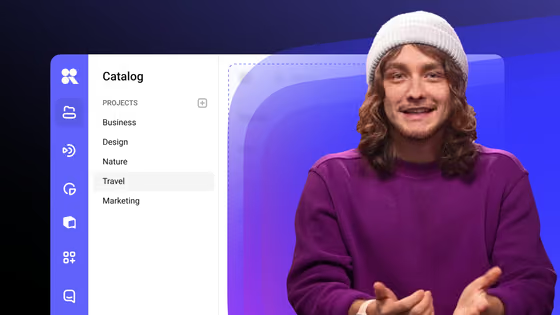
Each video is stored and transcoded into several qualities for adaptive bitrateAdaptive Bitrate (ABR)Automatically adjusts video quality in real time to match each viewer’s connection speed — smooth playback from 480p to 4K with no buffering.Open definition →, so it plays smoothly on any connection.
A network of servers close to viewers absorbs audience peaks — a premiere or a liveLive streamReal-time video delivered as it is captured, transcoded and segmented on the fly — webinars, events, broadcasts.Open definition → match.
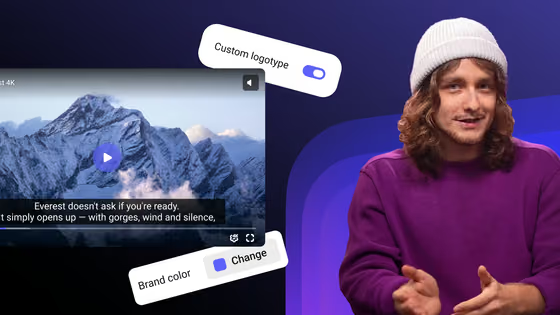
The web player and, where needed, mobile and smart TV apps, with your brand and no third-party ads.
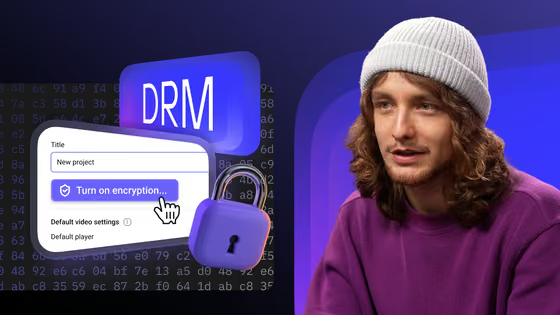
DRMDRMEncryption of the video file plus a licence server that issues a per-session key — so a downloaded copy stays unplayable.Open definition → so paid content cannot be copied, and access controlVideo access controlThe rules that decide who may start a video: approved domains, expiring signed links, geo and IP limits, passwords, one-time codes and SSO.Open definition → to decide who watches and from where.
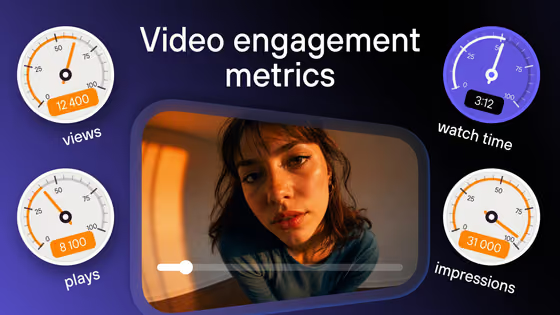
Subscriptions, payments or ads, and data on what is watched, for how long and where viewers drop off.
Business models: SVOD, AVOD and TVOD
| Model | How the viewer pays | Typical example |
|---|---|---|
| SVOD (subscription) | A recurring fee for the whole catalogue | Series platforms, academies with membership |
| AVOD (advertising) | Free, in exchange for ads | Free ad-funded channels |
| TVOD (transactional) | Pay per title: rent or buy | Film releases, single courses, paid events |
Many services combine models: a subscription catalogue plus VODVoD (Video on Demand)Pre-recorded video a viewer can start any time — the opposite of live. Transcoded once, then served from the CDN on request.Open definition → or live events paid separately.
Further reading
- Kinescope for developers — API, SDKs and the player for building your own OTT app.
- DRM — protecting paid content.